
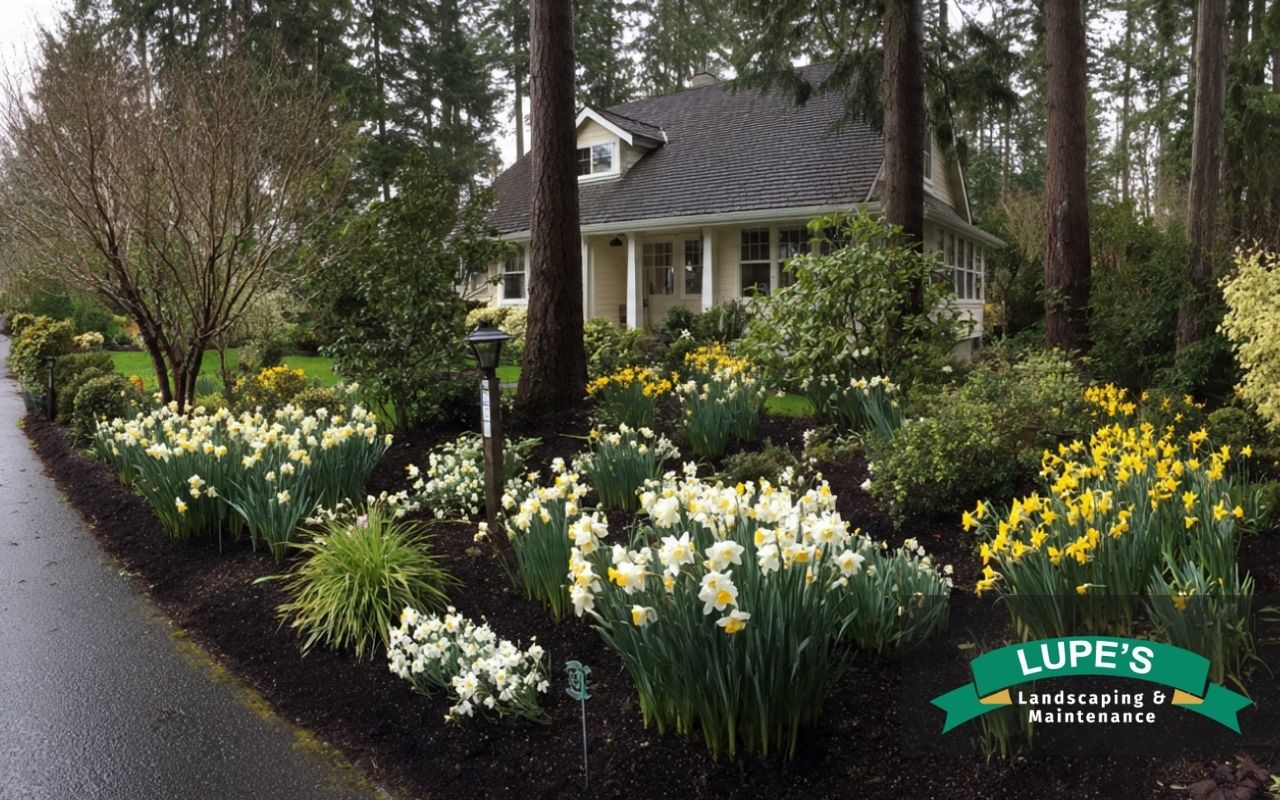
Breathe life into your garden this spring by learning how to turn your outdoor space into a thriving oasis on Bainbridge Island. With the right approach to spring landscaping planning in Bainbridge Island, you can build a strong base for a healthy garden that also boosts your home’s curb appeal.
Moreover, spring is the best time to start, because nature wakes up and gives you fresh chances to grow. As you plan, keep four basics in mind: an early spring checklist, a planting schedule, soil prep basics, and garden layout tips. Since Bainbridge Island has a unique climate, these steps can help your garden thrive.
Early Spring Checklist for Bainbridge Island Gardens
To start strong, gather the right tools and supplies for spring landscaping planning in Bainbridge Island. Begin with simple gear like pruners, gloves, rakes, and a sturdy hand shovel. Then, clean and sharpen tools so cuts are neat and your work feels easier.
Next, inspect irrigation parts and clear debris from hoses, nozzles, or drip lines so water runs well. After that, review beds and paths. Remove fallen branches, dead leaves, and old mulch. As a result, your space looks better and pests have fewer hiding spots.
- Clean and sharpen tools for safer cuts.
- Check hoses, nozzles, and drip lines for clogs.
- Clear winter debris from beds and walkways.
- Test soil moisture and pH before you plant.
Finally, test your soil moisture and pH so you know what to add before planting. If you want seasonal guidance for local yards, explore seasonal plant care on Bainbridge Island for ideas you can apply right away.
Crafting an Effective Planting Schedule
A clear planting schedule helps you time seed starts, moves, and repeat planting through spring. Use local frost patterns as a guide, noting the average last frost in mid-April. Then, draft a simple calendar for indoor seeding, hardening off, and moving plants into beds or pots.
Also, group plants by their growth time and space needs. Cool-weather crops like lettuce and peas often do well when started in March. Meanwhile, warm crops like tomatoes and peppers should wait until late April or early May. Therefore, a planting schedule helps you avoid surprises from late cold snaps.
- Mark indoor seed dates and outdoor move dates.
- Group plants by light, spacing, and harvest timing.
- Track results in a journal to improve next season.
For design-friendly planning that supports long-term results, you can also review sustainable landscape design and match your planting choices to smarter water and soil habits.
Soil Preparation Techniques for Bainbridge Island Terrain
Healthy soil is the base of a strong garden, so soil prep basics matter early. First, loosen tight ground with a garden fork or small tiller. Then, break up big clumps and mix in compost or aged manure to boost structure, airflow, and nutrients.
Since Bainbridge Island soils can lean acidic, consider adding lime if tests show a low pH. After that, level beds so watering spreads evenly. Then, add mulch like straw or shredded bark to hold moisture and slow weeds. As you go, keep soil damp, not soggy.
- Loosen compact soil to help roots spread.
- Mix compost for better texture and nutrients.
- Level beds for even watering and fewer puddles.
- Mulch to keep moisture and reduce weeds.
Designing a Thoughtful Garden Layout
Good garden layout tips turn a messy yard into a calm, useful space. Start with a quick sketch that shows trees, buildings, and sunny spots. Then, group plants with similar water and light needs. As a result, watering is simpler and care feels more routine.
Also, plan for height and spread so tall plants do not shade smaller ones. Next, add paths using mulch or stone so you can move without stepping on beds. Moreover, raised beds or pots can define zones and add visual height. Leave enough space for carts, too.
If you want plants that fit local conditions with less fuss, consider native plant landscaping to shape a layout that looks natural and stays resilient.
Selecting Native Plants for Bainbridge Island’s Climate
Choosing plants that fit local conditions can reduce effort and support wildlife. For example, red flowering currant, sword fern, and Oregon grape often need less extra water and handle local pests better. In addition, they help pollinators like bees and hummingbirds.
Before you buy, talk with local gardeners or visit nearby plant displays to learn what thrives in your microclimate. Then, mix evergreen shrubs with seasonal perennials for year-round interest. Also, add ground covers like salal or kinnikinnick to fill gaps and limit weeds.
Implementing Sustainable Watering Practices
Smart watering supports spring landscaping planning in Bainbridge Island, because rainfall can shift week to week. Drip lines send water right to roots, so less is lost to evaporation. Also, timers can water early in the day, which helps reduce leaf disease from late moisture.
Meanwhile, mulch keeps moisture in and helps steady soil temperature. If possible, collect rainwater in barrels and use it for garden beds. Then, check hoses and connectors often and fix leaks fast. As a result, you save water and protect plants during dry stretches.
Pest Management Strategies for Bainbridge Island Gardens
A balanced pest approach helps protect plants without harsh methods. First, welcome helpful insects like ladybugs and lacewings, since they eat common pests. Then, add companion plants like marigolds and nasturtiums that can deter some insects while attracting pollinators.
Also, inspect leaves often for chewing, sticky spots, or discoloration. Remove damaged leaves by hand when you can. For small outbreaks, neem oil or insecticidal soap may help. Finally, rotate crops each year to break pest cycles and lower soil disease risk.
Incorporating Seasonal Maintenance Tasks
Regular upkeep keeps your garden healthy through spring and beyond. In early spring, prune dead or sick branches to support fresh growth. Then, check supports for climbing plants and adjust ties so stems do not rub or break.
As days warm up, watch new plants and protect them from late cold nights. Weed weekly, because weeds steal water and nutrients. Then, add compost or organic fertilizer near vegetables to boost growth. Also, track tasks in a journal so planning gets easier next year.
Frequently Asked Questions
When should I start spring landscaping planning in Bainbridge Island?
Start in late winter to early spring. Then, clean beds, test soil, and plan planting dates before the mid-April frost window ends.
What belongs on an early spring checklist?
Include tool cleaning, irrigation checks, bed cleanup, soil testing, and mulch planning. That way, you begin planting with fewer surprises.
How do I build a planting schedule for my yard?
Use local frost timing and plant needs. Then, record seed start dates, hardening-off days, and move-out dates for each crop.
What are the most important soil prep basics?
Loosen compact soil, add compost, test pH, and mulch after leveling beds. As a result, roots settle faster and weeds slow down.
Which garden layout tips help reduce work later?
Group plants by water and sun needs, add clear paths, and plan spacing for mature size. Therefore, daily care becomes simpler.
Bringing Your Dream Garden to Life
With an early spring checklist, a smart planting schedule, and steady soil prep basics, you can build a garden that thrives. Moreover, garden layout tips and native plant choices can make care easier across the seasons. For support tailored to your yard, connect with Lupe’s Landscaping & Maintenance via the contact page and turn spring landscaping planning in Bainbridge Island into real results.