
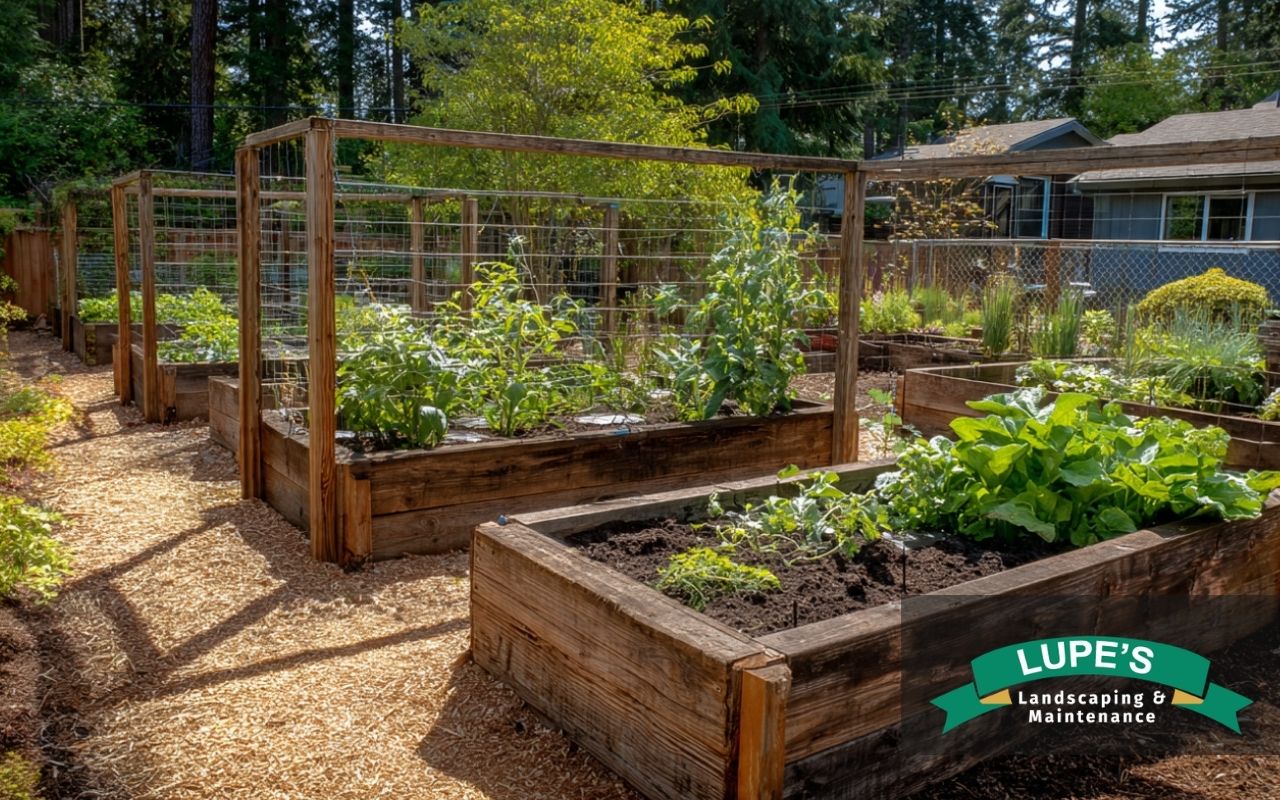
Raised garden beds on Bainbridge Island can turn a simple yard into a calm and useful garden space. Lupe’s Landscaping & Maintenance knows these beds help plants grow well in local rocky soil and wet weather.
They also give you more control over drainage, soil depth, and layout. As a result, you can grow vegetables, herbs, and flowers in a space that looks tidy and feels easy to enjoy.
Why Raised Garden Beds Work Well in Bainbridge Island Yards
Many yards on the island have heavy clay or rocky ground. Because of that, raised garden beds on Bainbridge Island give plants a better place to grow. Lupe’s Landscaping & Maintenance helps homeowners build garden spaces that warm faster in spring and drain better in rainy months.
These beds also reduce weeds, help block some pests, and make planting easier for all ages. In addition, neat bed lines can pair well with fresh landscaping services for garden and yard design that improve the full outdoor area.
- Better drainage during wet months
- Warmer soil in early spring
- Cleaner and more organized planting areas
Best Material Choices for Strong and Lasting Garden Beds
Lupe’s Landscaping & Maintenance helps homeowners compare wood and stone before they build. Cedar is a popular wood choice because it resists rot and looks natural. Stone, on the other hand, feels more permanent and blends well with island-style yards.
Wood beds are often easier to build and cost less at the start. Stone beds usually last longer, yet they need more labor. So, when choosing wood vs stone beds, think about your budget, style, and how long you want the beds to last.
Smart Design Ideas for Better Growing and Easy Access
Good design makes daily garden work much easier. For example, most beds should be three to four feet wide, so you can reach the center without stepping into the soil. With raised garden beds on Bainbridge Island, Lupe’s Landscaping & Maintenance also looks at slope, sunlight, and walking space.
Most plants need at least six hours of sun each day. Also, level beds help water spread more evenly. If you want a full yard plan, you can explore these flower bed ideas for beautiful outdoor spaces for more ways to shape a balanced garden.
- Keep paths wide enough for easy walking
- Place taller crops on the north side
- Group beds by crop type or water needs
Simple Vegetable Layout Tips for Small or Large Beds
A clear vegetable layout helps you grow more without making the bed crowded. Lupe’s Landscaping & Maintenance recommends simple shapes like rectangles because they are easy to build and easy to manage. Still, square or L-shaped beds can work well in tight corners.
Put tall crops where they will not block light from shorter plants. Also, keep plants with similar water needs together. This makes watering easier and helps your garden look neat, full, and easy to harvest through the season.
Soil Depth Tips for Healthy Roots and Better Harvests
Healthy soil is one of the most important parts of a good bed. With raised garden beds on Bainbridge Island, Lupe’s Landscaping & Maintenance often suggests a mix of topsoil, compost, and peat moss or coconut coir for better drainage and steady plant food.
Soil depth tips matter because not all crops need the same root space. Herbs and greens do well in 8 to 10 inches of soil. Tomatoes, carrots, and other deep-rooted plants usually need 12 to 18 inches for stronger growth.
- Use compost to improve soil each season
- Match soil depth to the plant type
- Add rich soil near the top for young roots
Watering and Drainage Steps That Help Beds Stay Productive
Watering at the right time helps plants stay strong. Early morning is best because less water is lost to heat. Lupe’s Landscaping & Maintenance often recommends drip lines or soaker hoses since they bring water close to the roots and keep leaves drier.
Good drainage is also important. A small gap at the top of the bed helps stop overflow, and level construction helps water move evenly. As a result, roots stay moist without sitting in heavy, soggy soil for too long.
Maintenance Habits That Keep Every Raised Bed Looking Great
Raised beds stay healthier when you do small tasks each week. Lupe’s Landscaping & Maintenance encourages regular weeding, light pruning, and quick harvesting. This simple routine helps stop pests, lowers disease risk, and keeps the garden looking fresh.
Mulch can also save time because it holds moisture and slows weed growth. In addition, yearly soil testing helps you spot pH or nutrient problems early. With a few steady habits, your garden can stay productive season after season.
Frequently Asked Questions
How deep should raised garden beds be for vegetables?
Most vegetables grow well in 12 inches of soil, while herbs and greens can grow in less. Deep-rooted crops usually need more space for better results.
Are wood or stone beds better for island gardens?
Both can work well. Wood is easier to build and often costs less, while stone lasts longer and gives a more permanent look.
What is the best place for a raised bed?
A sunny area with at least six hours of light is best. It should also have enough room around the bed for easy access.
How often should raised beds be watered?
That depends on the season and plant type. Still, most beds need regular checks, especially in warm and dry weeks.
Can professionals help with planning and installation?
Yes. Lupe’s Landscaping & Maintenance can help plan size, layout, materials, and planting areas for a more useful and attractive garden.
Common Mistakes People Make When Building Garden Beds
Some garden problems start with small mistakes. For example, beds that are too wide are hard to reach, and too much water can harm roots. When planning raised garden beds on Bainbridge Island, Lupe’s Landscaping & Maintenance helps homeowners avoid these common issues from the start.
It is also important not to use fresh manure or unfinished compost. These can damage roots and upset plant growth. Crop rotation matters too, because growing the same plant family in one spot each year can bring more pests and disease.
Create a Beautiful Garden Space with Help From Local Experts
With smart planning and regular care, raised garden beds on Bainbridge Island can bring fresh food, bright flowers, and more beauty to your yard. Lupe’s Landscaping & Maintenance can help you choose materials, plan soil depth, and design beds that fit your space.
If you are ready to start a garden that fits your home and local climate, visit the contact page for garden bed planning and take the next step with a team that understands Bainbridge Island yards.