
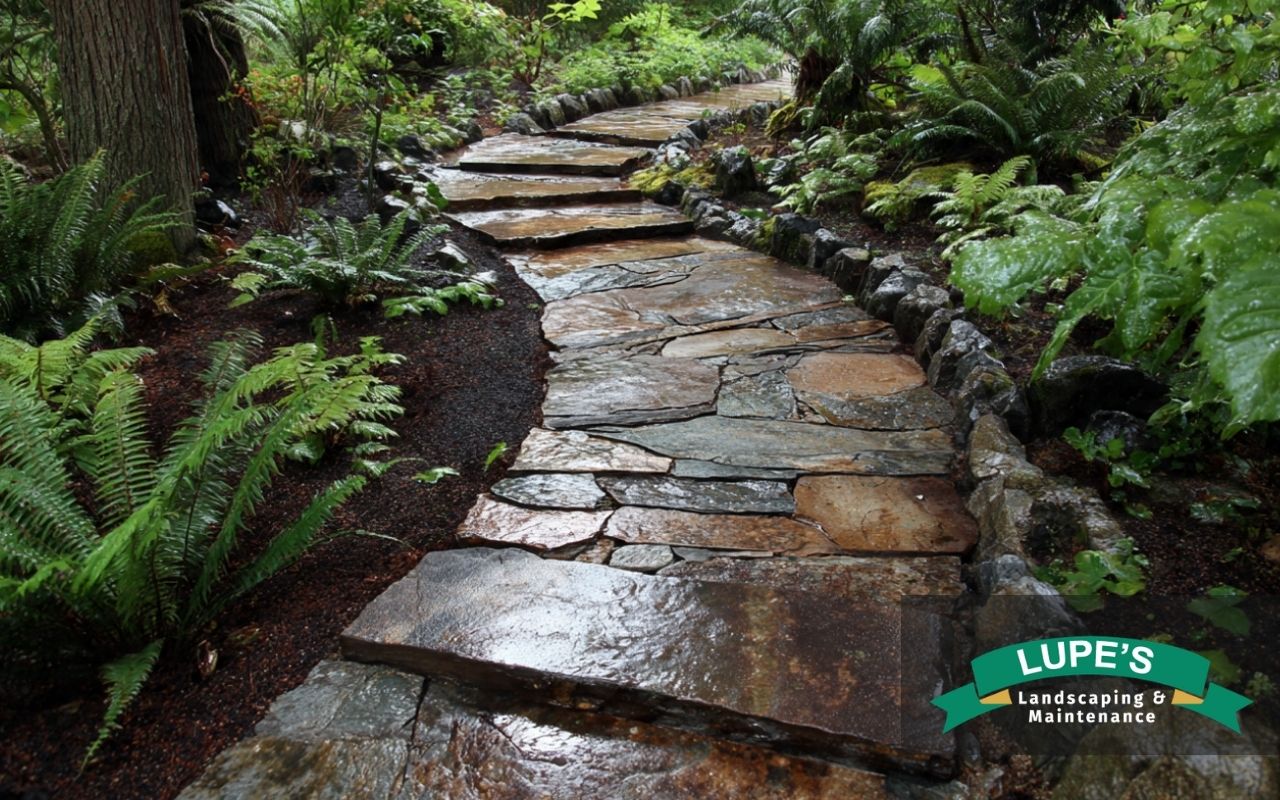
paver repair on Bainbridge Island helps bring back safe, clean, and even outdoor spaces. Lupe’s Landscaping & Maintenance knows that sunken, loose, or uneven stones can make your yard look poor and feel unsafe.
Rain, cold weather, and daily use often cause these problems. Still, with the right steps and support, you can fix the surface and enjoy a smooth path again.
Why Pavers Shift and Sink in Bainbridge Island Yards
Lupe’s Landscaping & Maintenance often sees damage from rain, weak base layers, and heavy use. In many cases, paver repair on Bainbridge Island starts after water moves the base or frost pushes stones up.
Tree roots can also lift pavers, while poor compaction may cause low spots. As a result, small changes grow into gaps, cracks, and trip risks over time.
- Rain can wash out base material and joint sand.
- Cold weather may lead to frost movement issues.
- Cars, foot traffic, and roots can shift the surface.
How to Check If Your Pavers Need Simple Repairs
Walk across the area and look for loose stones, low spots, or broken edges. Lupe’s Landscaping & Maintenance suggests checking the surface after rain because problem areas often show up more clearly then.
Also, note if water stays in one place or if stones sound hollow. These signs help you see whether you need a small fix or a larger repair.
- Look for uneven stones and wide gaps.
- Check for pooling water after rain.
- Mark cracked pavers before starting any work.
Tools and Materials That Make Paver Repairs Much Easier
Good tools help every repair go faster and look better. Lupe’s Landscaping & Maintenance recommends a flat shovel, rubber mallet, hand tamper, level, broom, and trowel for basic repair work.
You also need clean gravel, bedding sand, and matching pavers. For better joint strength, many homeowners choose sand made for joint sand replacement.
- Use a level to keep stones even.
- Choose gravel that drains water well.
- Match new pavers to the old size and color.
Easy Steps to Fix Sinking Pavers the Right Way
A good sinking pavers fix starts by lifting the low stones with care. Then remove loose sand or weak gravel until you reach a firm base below.
Add fresh gravel, compact it well, and spread a thin sand layer on top. After that, place the pavers back, tap them level, and make sure the surface lines up with the nearby stones.
When to Replace Broken Stones for a Better Surface
Cracked or chipped pavers should usually be replaced, not patched. Lupe’s Landscaping & Maintenance removes the damaged piece carefully so nearby stones stay in place and the pattern stays neat.
Next, the bedding is checked and leveled. Then the new paver goes in, and the joints are filled again so the area feels stable and looks complete.
Why Joint Sand Replacement Helps Pavers Stay Stable Longer
joint sand replacement is important because it helps hold the pavers together and lowers weed growth. It also helps stop water from washing out the space between the stones too quickly.
Sweep the sand into every joint and remove the extra from the surface. If you use polymeric sand, add light water so it can set and lock in place.
- Filled joints help reduce movement.
- Proper sand helps limit weed growth.
- Fresh sand supports a cleaner, tighter finish.
Smart Ways to Protect Repaired Pavers From Future Damage
After repairs, sealing can help protect the surface from stains, water, and wear. Lupe’s Landscaping & Maintenance recommends sealing only when the pavers are clean and fully dry.
This step can also help with color and make future cleaning easier. In addition, sealed surfaces often handle frost movement issues better over time.
Frequently Asked Questions
What causes pavers to sink in the first place?
Pavers often sink because of poor compaction, water under the base, or heavy weight on weak areas. Over time, these issues make the surface uneven.
Can I do a sinking pavers fix by myself?
Yes, you can fix small areas if you have the right tools and a stable base. However, large repairs may need expert help for lasting results.
How often should I add new sand between pavers?
You should check the joints after strong rain and windy weather. When sand looks low, add more to keep the pavers steady and reduce movement.
Do cold seasons really affect paver surfaces?
Yes, frost movement issues can push stones up or apart when water freezes below them. Because of this, winter care matters a lot.
When should I call a contractor for help?
If many stones move, the base feels weak, or water keeps pooling, it is smart to call a professional. Bigger repairs often need better tools and deeper work.
Choosing DIY Work or a Local Repair Expert Wisely
Some small jobs are easy for homeowners, while others need a trained team. If the problem is limited to a few stones, basic repairs may be enough.
Still, wide settling and deep base damage often need a paver repair contractor on Bainbridge Island. Lupe’s Landscaping & Maintenance can also help homeowners compare repair needs with larger outdoor goals through hardscaping services for outdoor surfaces.
Simple Maintenance Tips for Pavers That Last Much Longer
Regular care keeps your surface safe and attractive. Sweep often, remove weeds early, and check the joints after storms so small problems do not turn into bigger ones.
It also helps to review nearby surfaces that may need related care, such as patio crack repair for damaged patios or permeable paver options for drainage. When you need direct help, reach Lupe’s Landscaping & Maintenance through the contact page for repair support.
Final Thoughts on Restoring Safe and Clean Outdoor Paver Spaces
paver repair on Bainbridge Island can improve both safety and curb appeal when handled early. With clear inspection, good materials, and steady care, your paths and patios can stay level for years.
Lupe’s Landscaping & Maintenance makes paver repair on Bainbridge Island easier with simple solutions and trusted local support. Whether you need one repair or full surface care, smart action today helps protect your outdoor space tomorrow.