
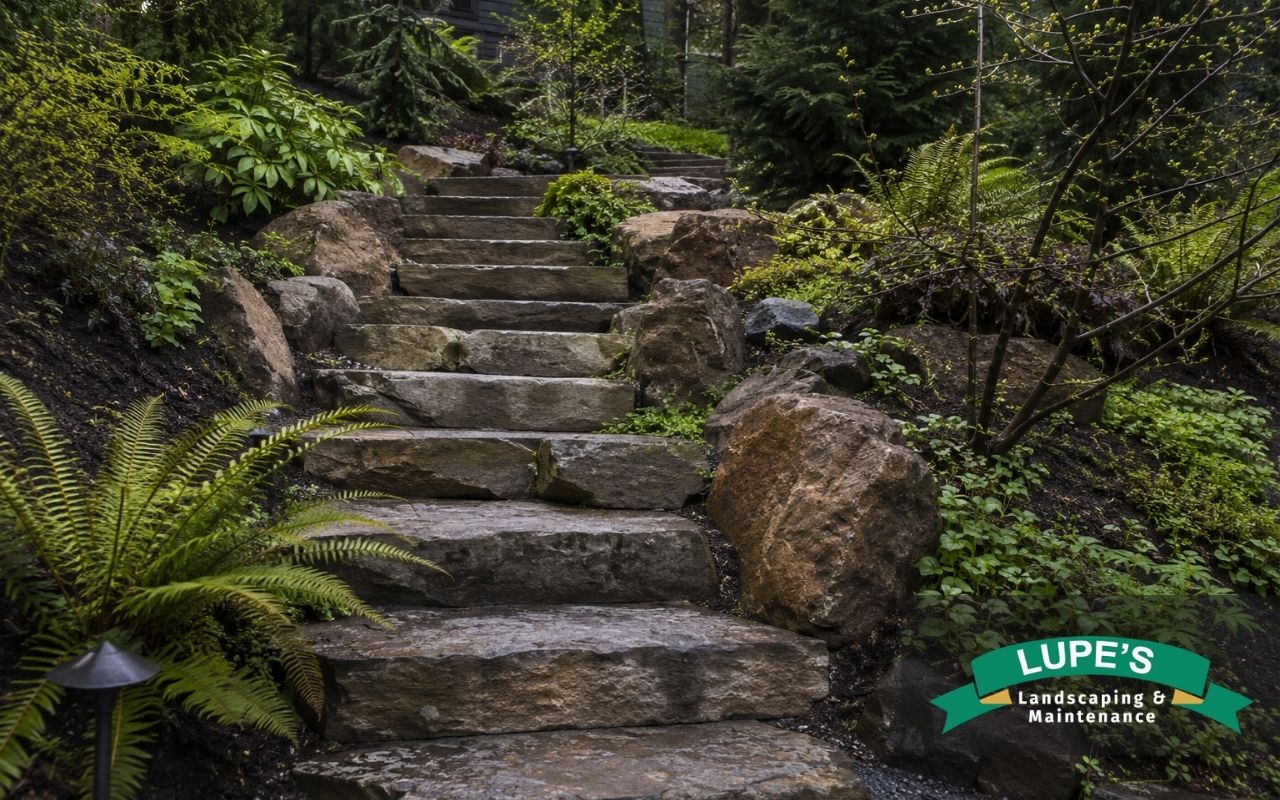
Outdoor stone steps can turn a sloped yard into a safe, useful, and beautiful path. They connect patios, gardens, and outdoor living areas while adding a natural look that fits the Bainbridge Island landscape.
At Lupe’s Landscaping & Maintenance, we design steps that feel steady, simple to use, and easy to enjoy. For a natural finish, explore our native stone options as you plan your backyard upgrade.
Natural Stone Choices for Backyard Steps
The right stone should match your home, your yard, and the way you use the space. Natural stone step ideas can include smooth sandstone, rugged granite, classic bluestone, or mixed stone with varied color and texture.
Each stone has a different look and feel. Some stones create a clean garden path, while others give a more rustic style. Outdoor stone steps should also hold up well in local weather and stay comfortable underfoot.
- Granite works well for strong, long-lasting steps.
- Bluestone offers a textured surface for better grip.
- Limestone gives a smooth and formal garden look.
- Mixed native stone can create a natural island style.
Planning Safe Steps on a Sloped Yard
A good layout begins with the shape and angle of your slope. Step safety design in Bainbridge Island should focus on steady footing, clear movement, and a path that feels natural from the first step to the last.
The rise and depth of each step matter. When steps are too tall, they can feel tiring. When they are too shallow, they may feel awkward. A balanced design makes the path easier for family, guests, and everyday use.
How Should Outdoor Stone Steps Handle Drainage?
Drainage is a key part of outdoor stone steps because water can cause slipping, erosion, and movement over time. A well-planned base helps water move away from the path instead of collecting around the stones.
Gravel, stone dust, and small gaps between stones can help manage runoff. With Lupe’s Landscaping & Maintenance, you get a design approach that considers both beauty and function before the first stone is set.
- Check where water naturally flows after rain.
- Plan a stable base below each step.
- Use joint material that supports drainage.
- Keep soil and mulch from washing onto the steps.
Layout Ideas for Comfortable Slope Transitions
Slope transition tips can help you create a path that feels smooth instead of forced. Straight steps may work well for short slopes, while gentle curves can soften the look of a larger garden area.
Landings can also make a steep yard easier to use. They give people a place to pause, turn, or enjoy the view. For more design inspiration, visit our page about natural stone for hardscaping.
Installation Details That Support Long-Term Stability
Stone step installation in Bainbridge Island should start with a clear plan and careful ground preparation. The area must be cleared, shaped, and compacted before the stone is placed. This helps reduce shifting and uneven spots.
Our team at Lupe’s Landscaping & Maintenance focuses on a stable base, even spacing, and careful placement. A strong foundation helps each step stay level and makes the finished path feel secure.
- Clear roots, loose soil, and debris from the work area.
- Excavate enough space for stone and base material.
- Add compacted gravel for support and drainage.
- Set each stone with steady rise and depth.
- Fill joints to help lock stones in place.
Finishing Touches for Beauty and Safety
Small details can make stone steps safer and more inviting. Rounded edges, clear borders, and good lighting help people see each step. These features are especially useful near patios, garden paths, and darker areas of the yard.
Planting around the steps can soften the hardscape and make the path feel like part of the landscape. Low groundcovers, ornamental grasses, and mulched beds can frame the stones without blocking the walkway.
Frequently Asked Questions
What stone works best for outdoor steps?
The best stone depends on your style, slope, and use. Granite, bluestone, and native stone are common choices because they offer strength, texture, and a natural look.
Can stone steps be added to a steep backyard?
Yes, a steep yard can often support stone steps with the right layout, base, and drainage plan. For related surface options, see our concrete and stone solutions.
How do I make outdoor steps safer?
Safe steps need a consistent rise, enough tread depth, stable stone, and clear visibility. Lighting and handrails may also help in areas with bigger elevation changes.
Do natural stone steps need much maintenance?
They need basic care, such as clearing debris, checking for loose stones, and refreshing joint material. You can also review our native stone landscaping materials when planning long-term upkeep.
Who can help with stone step installation?
When you choose Lupe’s Landscaping & Maintenance, we can help plan a stone path that fits your slope, style, and outdoor goals. Start by using our contact page to share your project details.
Create a Safer Path Through Your Landscape
Outdoor stone steps can make your yard easier to move through and more enjoyable every day. With thoughtful stone selection, solid base work, and clean finishing details, your path can feel both practical and peaceful.
With Lupe’s Landscaping & Maintenance, you can shape a slope into a natural feature that connects your home and garden. To plan stone steps that match your space, request help through our outdoor stone steps project form.