
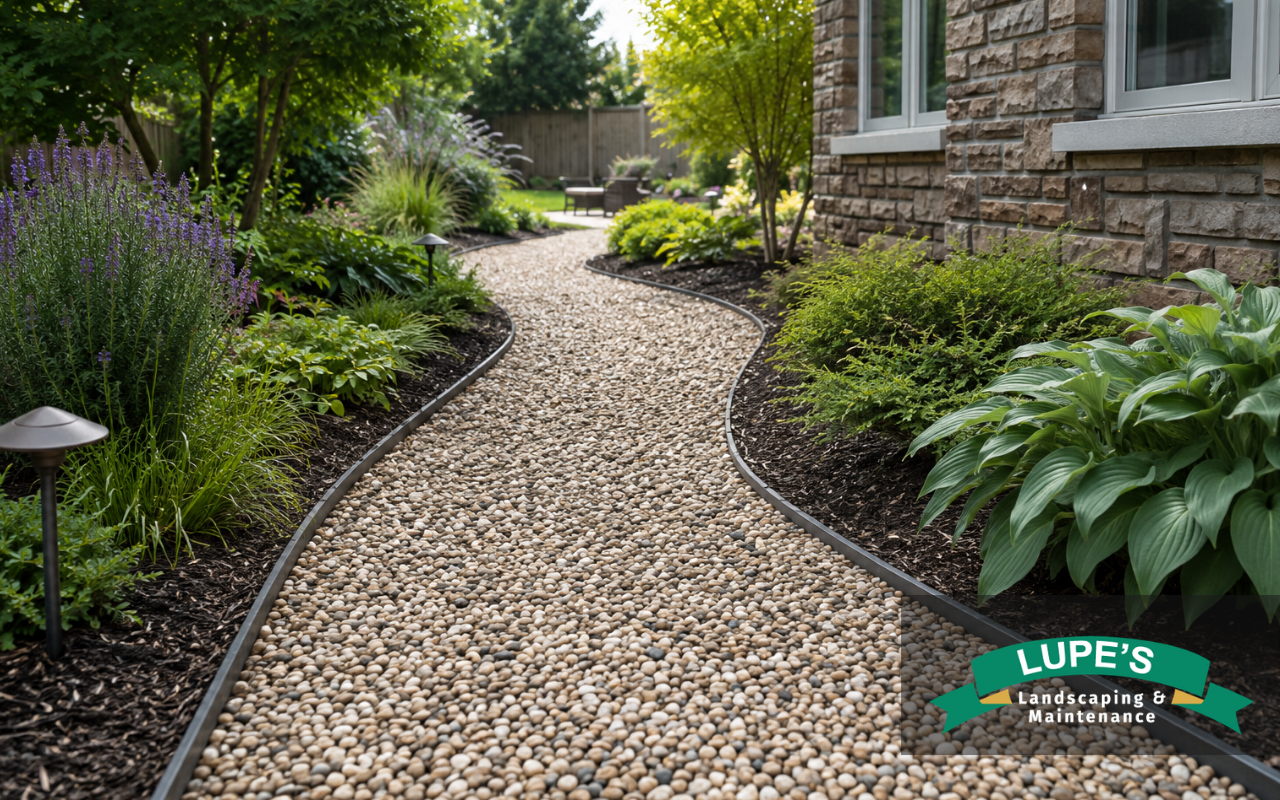
Decorative rock landscaping can turn an ordinary yard into a clean, inviting outdoor space. Stone adds lasting color, texture, and structure without demanding constant care. Homeowners can use it to shape paths, frame plants, improve drainage, or create a strong focal point.
At Lupe’s Landscaping & Maintenance, we help homeowners choose practical materials that suit their yard and design goals. Natural stone can also support a more connected landscape when paired with native stone landscaping options.
Choosing Decorative Rocks for Your Garden Style
Start by looking at your home, plants, and existing hardscape. Rounded stones create a soft and natural appearance. Angular rocks feel more structured and often stay in place better. Light stone can brighten shaded spaces, while darker material creates contrast beside green plants.
Size also affects the final look. Small gravel works well in compact areas and between stepping stones. Medium rocks can cover beds or drainage zones. Large stones and boulders create strong accents. A simple mix of two sizes usually looks more balanced than several competing materials.
Before installation, consider how the area will be used. Walking surfaces need stable materials, while decorative beds allow more freedom. With Lupe’s Landscaping & Maintenance, you can plan a stone layout that supports both visual appeal and daily use.
Where Can Decorative Rock Work Best?
Stone is useful in many parts of a residential landscape. The best location depends on foot traffic, water flow, nearby plants, and the amount of maintenance you want to reduce.
- Garden beds: Use stone around shrubs and established plants for a tidy surface.
- Walkways: Create informal paths with compacted gravel, stepping stones, or both.
- Drainage areas: Guide runoff through dry creek beds or rock-lined channels.
- Landscape borders: Separate lawns, beds, patios, and planting zones.
- Accent areas: Place boulders or grouped stones near entrances and seating spaces.
Leave open space around plant stems so water can reach the soil. In walking areas, a prepared base and firm edging help prevent movement. Thoughtful placement makes decorative rock landscaping feel intentional rather than added as an afterthought.
River Rock Landscaping for Natural Visual Flow
River rock landscaping uses smooth, rounded stones to create a calm and natural look. These rocks work especially well near water features, downspouts, drainage channels, and curved garden beds. Their varied colors can connect different parts of the yard without making the design feel busy.
A dry creek bed is one practical idea. Larger stones can define the edges, while smaller river rocks fill the center. The feature can direct water during wet weather and remain attractive when dry. Native plants placed nearby help soften the edges and support a natural transition.
River rock can shift under frequent foot traffic, so it is not always the best choice for a main walkway. For surfaces that need more stability, consider combining it with flat stepping stones or exploring green hardscaping design options.
Crushed Stone Ideas for Paths and Borders
Crushed stone has angular edges that lock together when compacted. This makes it a practical choice for paths, seating areas, borders, and spaces between larger stones. It also provides a more structured appearance than rounded rock.
- Create a curved garden path bordered by metal or stone edging.
- Fill the spaces between large stepping stones for a stable walking surface.
- Use contrasting crushed stone around a single boulder or garden feature.
- Define a seating area without adding a large solid surface.
- Build a narrow border between planting beds and lawn areas.
Good crushed stone ideas begin with proper preparation. Remove loose soil, shape the area, and add a suitable base when needed. Compacting each layer can reduce sinking and uneven spots. At Lupe’s Landscaping & Maintenance, we consider how the material will drain and perform before shaping the final surface.
Planning Rock Features Around Water and Plants
Decorative stone can improve drainage while adding detail around plants. A rock-lined channel may guide water away from a wet area. Stone around a downspout can also reduce soil erosion. The slope, soil, and direction of runoff should guide the design.
In planting beds, avoid placing heavy layers directly against stems or trunks. Rocks can hold heat, so plant choice and sun exposure matter. Drought-tolerant and native plants often pair well with stone, but every bed needs enough open soil for water and air to reach the roots.
Boulders can act as visual anchors near shrubs, ornamental grasses, or low ground covers. Place part of each boulder below ground level to create a more natural appearance. Grouping an odd number of stones often produces a relaxed and balanced layout.
Working With a Bainbridge Island Rock Contractor
A rock landscaping contractor in Bainbridge Island can help match materials to local site conditions. Professional planning is especially useful when a project involves drainage, grading, large boulders, retaining features, or heavily used paths.
- Identify where water collects or moves across the property.
- Choose rock sizes that fit the scale of the home and garden.
- Prepare a stable base for paths and high-traffic areas.
- Plan edging that keeps loose materials contained.
- Coordinate stone placement with plants and existing hardscape.
Our team at Lupe’s Landscaping & Maintenance can review the space, discuss the intended use, and help organize the project around practical needs. Homeowners can discuss a decorative rock landscaping project before deciding on materials or layout.
Frequently Asked Questions
Is decorative rock suitable for every garden bed?
It works best around established plants that do not need frequent dividing or soil changes. Sun exposure, plant type, and drainage should be considered first. Homeowners interested in locally suited materials can review our native stone choices for garden beds.
Does river rock help with yard drainage?
River rock can protect soil and create a clear route for runoff, but the stone alone does not solve every drainage issue. The area still needs the correct slope and outlet. A planned channel or dry creek bed is usually more effective than placing rocks over a wet spot.
What type of rock works best for walkways?
Angular crushed stone is often easier to compact than smooth river rock. Stepping stones can add stability and make the route more comfortable. For ideas that balance drainage and access, explore our hardscaping ideas for walkways.
How can I keep decorative rocks from spreading?
Use firm edging along paths, beds, and lawn borders. The base should also be prepared and compacted where appropriate. Choosing the right rock size can reduce movement. Small, rounded stones usually travel more easily than angular materials.
When should I hire a professional contractor?
Professional support is useful when the project includes grading, drainage changes, heavy stone, or a large installation area. When you choose Lupe’s Landscaping & Maintenance, we can help evaluate the site and organize the next steps. Use our contact page for a Bainbridge Island rock project.
Shape a Lasting Landscape With Decorative Rock
Decorative rock landscaping offers a durable way to improve paths, beds, drainage areas, and garden accents. The strongest designs combine the right material with careful placement, stable edges, and plants that suit the site. A clear plan helps every stone serve a visual or practical purpose.
Begin with one area that needs better structure or easier care. To plan a rock feature that fits your Bainbridge Island property, contact our landscaping team and share how you want the space to look and function.