
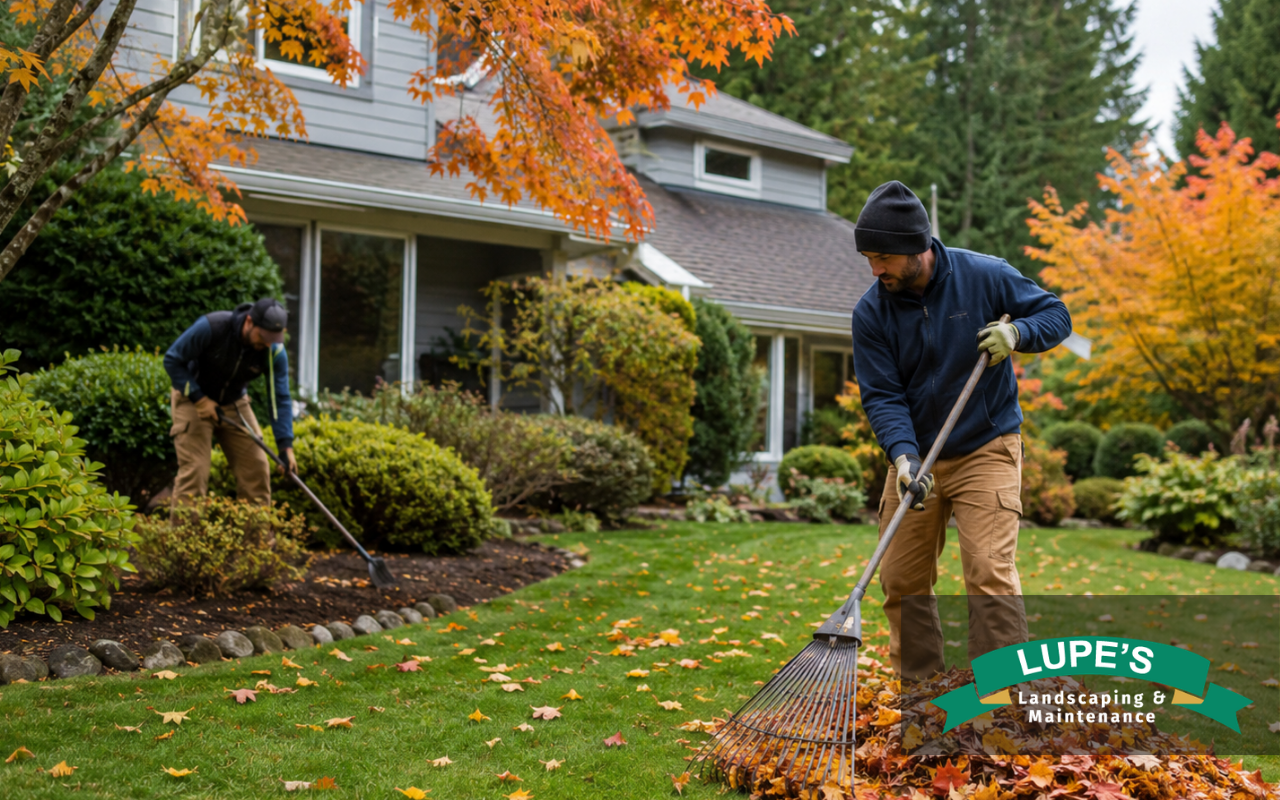
Fall on Bainbridge Island is more than a cleanup season. It is the best time to evaluate drainage, prepare planting areas, protect outdoor surfaces, and decide which improvements should be completed before winter rain becomes persistent. A thoughtful fall landscape planning process can reduce rushed repairs, protect valuable plants, and give residential or commercial properties a cleaner start in spring.
At Lupe’s Landscaping & Maintenance, we bring more than 20 years of experience to seasonal landscape work across Bainbridge Island. We provide free estimates, serve residential and commercial properties, and remain licensed and insured for the work we perform.
Start With the Areas That Collect Water
Western Washington’s wet season can expose problems that remain hidden during summer. Before adding plants or decorative features, walk the property and identify low areas, compacted soil, overflowing beds, and hard surfaces that send runoff toward buildings.
- Look for soil erosion below downspouts and slopes.
- Check whether walkways hold water after ordinary rain.
- Notice mulch or soil washing onto patios and driveways.
- Confirm that drainage paths do not direct runoff toward foundations.
- Review shoreline or critical-area restrictions before major clearing or grading.
Bainbridge Island regulates certain grading, clearing, shoreline, and hard-surface work. Projects near the shoreline, wetlands, steep slopes, or other critical areas may require additional review. A landscape plan should account for these conditions before excavation begins.
A Practical Seasonal Landscape Checklist
| Area | Fall Task | Why It Matters |
|---|---|---|
| Planting beds | Remove spent annuals and invasive weeds | Reduces competition and creates room for new planting |
| Soil | Check compaction and drainage | Helps roots receive water and oxygen without remaining saturated |
| Mulch | Refresh thin areas without piling material against stems | Moderates soil temperature and limits erosion |
| Hardscape | Inspect joints, edges, and settled sections | Prevents small movement from becoming a trip hazard |
| Drainage | Clear channels and redirect harmful runoff | Protects structures, beds, and walking surfaces |
| Outdoor access | Trim back obstructing growth | Keeps entries and service routes usable during shorter days |
Preparing for Fall Without Over-Cleaning
Not every leaf or dormant stem needs to disappear immediately. Some plant material protects soil and provides seasonal habitat. The goal is to remove diseased debris, slippery buildup, invasive growth, and material that blocks drainage while preserving healthy landscape functions.
For a more detailed cleanup approach, review our autumn garden cleanup guide. For broader installation and maintenance options, explore our landscaping services.
Prioritize Safety Around Walkways
Wet leaves, moss, uneven pavers, and poorly lit transitions can create slippery conditions. Clear main routes first, especially around stairs, mailboxes, parking areas, and commercial entrances. Repairing a settled edge before winter is often easier than dealing with movement after repeated saturation and freezing.
Plan Planting Around Mature Size
A common garden transition mistake is choosing plants for their nursery size rather than their mature width and height. Crowded planting can block airflow, hide signs of damage, and create extra maintenance. Fall planning should consider sun exposure, soil moisture, drainage, and how each plant will interact with nearby paths or structures.
Red Flags, or Common Mistakes
⚠️ Red Flag: Water that repeatedly collects beside a foundation, retaining feature, or paved surface should not be treated as a cosmetic issue.
🚫 Common Mistake: Avoid placing fresh mulch directly against trunks, siding, or wood structures. Leave a visible gap to reduce excess moisture at the contact point.
Turn Fall Observations Into a Spring-Ready Plan
A strong plan separates immediate needs from optional upgrades. Drainage corrections, unstable hardscape, and access issues should come first. Planting improvements, decorative borders, and layout changes can follow once the site functions correctly.
At Lupe’s Landscaping & Maintenance, we help property owners organize work into practical phases. Our regular hours are Monday through Saturday from 7:00 a.m. to 7:00 p.m. We accept cash and checks, provide free estimates, and work with both homeowners and commercial property managers.
Frequently Asked Questions
When should I begin fall landscape planning?
Start in late summer or early fall, before heavy rain limits access. Early planning gives you time to inspect drainage, schedule cleanup, refresh beds, and complete needed hardscape repairs.
What should be first on a seasonal landscape checklist?
Begin with safety and water management. Clear primary walkways, inspect drainage routes, remove hazardous debris, and identify areas where runoff is eroding soil or collecting near structures.
Can landscaping work continue during rainy months?
Some maintenance can continue, but excavation, grading, and hardscape installation depend on soil conditions and project scope. Scheduling earlier often reduces delays and site disturbance.
Do Bainbridge Island landscape projects need permits?
Routine maintenance may not, but grading, significant clearing, shoreline work, drainage changes, and added hard surfaces can require review. Confirm project-specific requirements before work begins.
Does your company serve commercial properties?
Yes. At Lupe’s Landscaping & Maintenance, we provide residential and commercial landscape services, free estimates, and scheduling Monday through Saturday from 7:00 a.m. to 7:00 p.m.
Schedule Fall Landscape Services in Bainbridge Island
Do not wait until saturated soil and heavy leaf buildup make outdoor work more difficult. A professional evaluation can identify drainage concerns, cleanup priorities, worn materials, and opportunities to improve the property before winter.
Contact Lupe’s Landscaping & Maintenance for a free fall landscape estimate. With more than 20 years of experience, we can help you create a cleaner, safer, and better-prepared outdoor space.