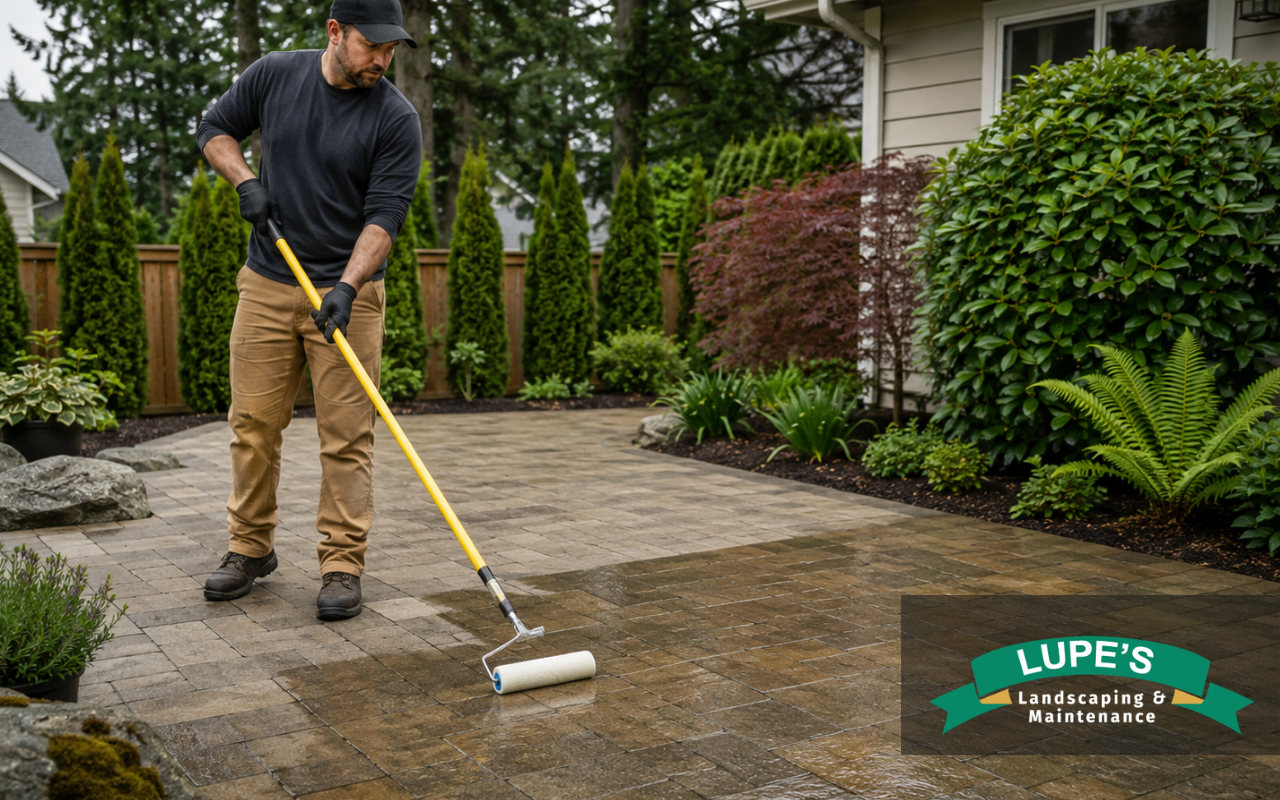
Pavers can create attractive patios, walkways, and gathering areas, but the surface must handle rain, shade, moss, leaves, spills, and everyday traffic. Sealing may improve appearance and make cleaning easier, yet it is not a substitute for proper installation, joint stability, drainage, or routine care.
This paver sealing guide explains when sealing pavers makes sense, which problems should be corrected first, and how Bainbridge Island property owners can protect outdoor surfaces without trapping moisture beneath a coating.
Should Every Paver Surface Be Sealed?
No. The decision depends on the paver type, manufacturer guidance, age, joint material, drainage, desired finish, and previous coatings. Some owners want richer color and easier stain cleanup. Others prefer an uncoated, natural appearance.
Before recommending a product, a paver sealing contractor in Bainbridge Island should confirm that the surface is stable, dry enough, and compatible with the proposed sealer.
Benefits and Limits of Paver Protection
| Potential Benefit | What Sealing Can Do | What It Cannot Fix |
|---|---|---|
| Stain prevention | May reduce absorption and simplify cleanup | Cannot guarantee protection from every spill |
| Color enhancement | Can deepen or enrich the surface tone | Cannot make faded or damaged pavers new |
| Joint support | Some products help stabilize compatible joint sand | Cannot correct a failed base or severe settlement |
| Weather exposure | May reduce water penetration into certain materials | Cannot stop movement caused by drainage problems |
| Cleaning | Can make organic stains easier to remove | Does not eliminate moss, leaves, or maintenance |
Surface Problems to Repair Before Sealing
- Loose, rocking, or settled pavers
- Standing water after ordinary rain
- Failed edging that allows outward movement
- Deep moss or organic buildup in shaded areas
- Oil, rust, or leaf stains that need treatment
- Missing or contaminated joint sand
- Old sealer that is peeling, whitening, or uneven
Applying a new coating over moisture, dirt, or incompatible old sealer can create haze, trapped discoloration, peeling, or an inconsistent finish.
The Paver Sealing Process
1. Inspection and Compatibility Review
The surface, previous treatment, joints, slope, and drainage are reviewed. Product instructions should match the paver material and intended use.
2. Repairs and Deep Cleaning
Unstable areas are corrected before cleaning. The surface must be cleared of moss, dirt, stains, and cleaning residue without damaging joints or surrounding landscaping.
3. Drying
Drying time is critical in the Pacific Northwest. Shade, cool temperatures, porous materials, and recent rain can keep moisture within the pavers longer than the surface appearance suggests.
4. Joint Restoration
Compatible joint sand may be added or adjusted after cleaning. The correct timing depends on the sealer and joint system.
5. Controlled Application
Sealer is applied evenly under suitable weather conditions. Overspray, puddling, and contact with plants, siding, or adjacent materials must be controlled.
Expert Tips, Red Flags, or Common Mistakes
☀️ Expert Tip: Choose a dry weather window that includes preparation and curing time. A single rain-free afternoon may not be enough.
⚠️ Red Flag: White or cloudy patches can indicate trapped moisture, overapplication, or incompatibility with an existing coating.
🚫 Common Mistake: Do not seal a patio simply to hide settlement. The base and drainage should be repaired first.
Permeable Pavers Need Special Consideration
Permeable systems rely on open joints and a drainage base. Applying the wrong sealer or filling the joints with unsuitable material can reduce infiltration. Review our information about permeable pavers before treating this type of surface.
For nearby service information, visit our page about concrete sealing in Kingston.
When Local Rules May Matter
Routine surface sealing may not require a permit, but repairs that expand hard surfaces, alter drainage, involve grading, or occur within shoreline or critical areas can require City review. Bainbridge Island considers new and replaced hard surfaces in site planning, so larger remodeling projects should be evaluated before construction.
Professional Paver Sealing in Bainbridge Island
At Lupe’s Landscaping & Maintenance, we use more than 20 years of experience to evaluate pavers as a complete system. We do not treat coating as a cure for drainage, base, or edge failures. Our licensed and insured team serves residential and commercial properties and provides free estimates.
We are available Monday through Saturday from 7:00 a.m. to 7:00 p.m. Payment options include cash and checks.
Frequenly Asked Questions
How often do pavers need to be resealed?
The interval varies by product, exposure, traffic, cleaning methods, and paver type. Inspect performance rather than resealing automatically on a fixed schedule.
Can pavers be sealed immediately after installation?
Not always. Installation materials may need time to settle or release moisture. Follow the paver and sealer manufacturers’ requirements before applying a coating.
Will sealing stop moss from growing?
Sealing may make cleaning easier, but it cannot eliminate shade, moisture, debris, or airborne growth. Regular sweeping, drainage control, and safe cleaning remain important.
Can you seal permeable pavers?
Only with products and methods compatible with the permeable system. The open joints must continue to accept water, so ordinary sealing practices may not be appropriate.
Do you seal commercial paver areas?
Yes. At Lupe’s Landscaping & Maintenance, we evaluate residential and commercial paver surfaces and provide free estimates for suitable cleaning and sealing work.
Protect Your Pavers With a Clear Plan
A good sealing project begins with clean, stable, dry pavers and ends with a finish suited to the material and expected use. Proper preparation is what separates a lasting improvement from a blotchy temporary coating.
Contact us free estimate in Bainbridge Island.