
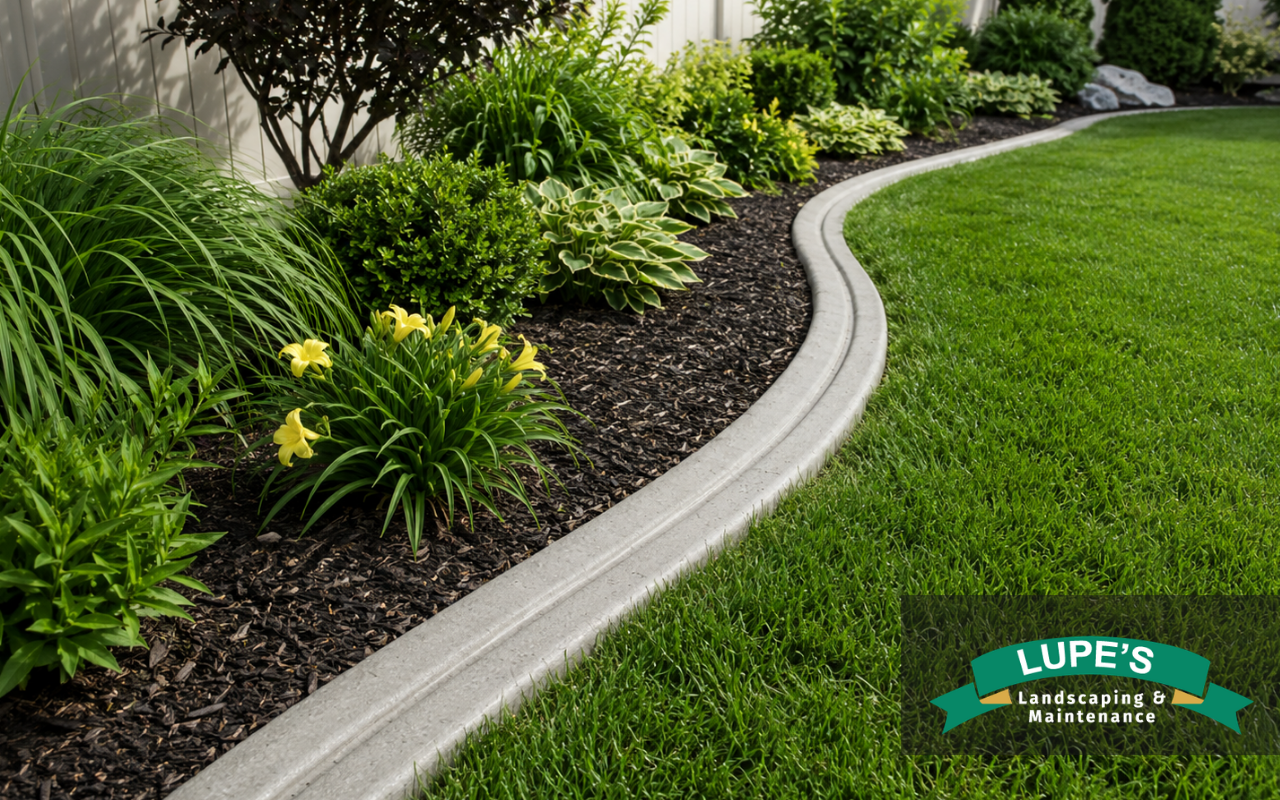
Landscape edges often fail quietly. Plastic rises from the soil, timber begins to deteriorate, and loosely placed blocks shift out of alignment. Decorative concrete borders provide a more permanent way to define planting beds, separate lawn from hardscape, and create a finished line around residential or commercial landscapes.
The best border is not only decorative. It must fit the grade, drainage, mowing pattern, surrounding materials, and movement of the soil.
What Are Decorative Concrete Borders?
Concrete edging is formed or installed as a continuous or segmented border. Depending on the design, it can be smooth, colored, textured, or patterned to coordinate with patios, walkways, stone, and architecture.
Common applications include:
- Front-yard planting beds
- Tree and shrub islands
- Commercial entry landscaping
- Transitions between bark and lawn
- Decorative borders around patios
- Edges beside gravel or stone areas
Stamped Borders and Other Finish Options
| Border Style | Appearance | Best Setting | Maintenance Note |
|---|---|---|---|
| Smooth concrete edging | Clean and simple | Modern or understated landscapes | Shows cracking or staining clearly |
| Stamped borders | Patterned to resemble stone or masonry | Decorative patios and formal beds | Texture needs careful cleaning |
| Colored concrete edging | Coordinated with existing materials | Homes with defined exterior palettes | Color should be tested in sun and rain |
| Exposed aggregate border | Textured and natural-looking | Northwest landscapes and gravel areas | Surface should remain comfortable near paths |
| Precast units | Consistent modular pieces | Smaller or repair-friendly borders | Individual sections can shift without a stable base |
Benefits of Concrete Edging
- Creates a clear, durable division between materials
- Reduces mulch and gravel migration
- Supports smooth curves and custom bed shapes
- Can coordinate with stamped concrete patios
- Provides a visible mowing or maintenance edge
- Adds a finished appearance to commercial entries
Concrete borders are durable, but they are not immune to movement. Poor base preparation, drainage problems, roots, freeze-thaw cycles, and heavy impact can lead to cracking or settlement.
How Professional Installation Works
Layout and Grade Review
The border line is marked and viewed from several angles. Curves should complement the property rather than create narrow, hard-to-maintain bed areas.
Excavation and Base Preparation
Loose soil and organic material are removed. The base is prepared to support the border and maintain the intended height.
Forming, Reinforcement, and Placement
The installation method depends on border type, dimensions, soil, and expected use. Concrete is placed and finished without blocking drainage paths.
Texture, Color, and Curing
Stamped or colored finishes are completed under suitable conditions. The border needs appropriate curing and protection from traffic.
Expert Tips, Red Flags, or Common Mistakes
🎨 Expert Tip: Compare color samples beside the home and existing hardscape when both are wet. Pacific Northwest rain can deepen colors significantly.
⚠️ Red Flag: A border that traps water inside a bed may contribute to saturated soil, plant decline, or overflow across nearby paving.
🚫 Common Mistake: Avoid creating tight decorative curves that a mower cannot follow and maintenance tools cannot reach.
Concrete Borders and Drainage
A continuous border can redirect surface water, which may be useful or harmful depending on the layout. Water should have a planned route through or around the edged area. Openings, grade changes, and nearby drains must remain functional.
Projects that add hard surfaces, alter grading, or affect shoreline and critical areas may require City review. The complete work area—not only the visible border—should be considered during planning.
Coordinate Borders With Existing Hardscape
Learn more about combining concrete and stone in landscape construction. Property owners considering patterned surfaces can also review our information about stamped concrete patios.
Frequently Asked Questions
Will decorative concrete edging crack?
Concrete can crack, but correct base preparation, placement, joint planning, curing, and drainage reduce avoidable problems. Soil movement and roots can still affect it.
Can concrete borders be stamped or colored?
Yes. Decorative options can coordinate with patios, walkways, stone, and exterior colors. Samples should be reviewed under actual site lighting and wet conditions.
Does concrete edging stop every weed?
No. It creates a physical division and may simplify maintenance, but weeds can still grow in beds, cracks, joints, or soil collected along the edge.
Can a border be installed around an existing patio?
Often, yes. The installer must evaluate elevations, drainage, base conditions, access, and how the border connects to the existing surface.
Do you install borders at commercial properties?
Yes. At Lupe’s Landscaping & Maintenance, we install decorative landscape borders for residential and commercial properties and provide free estimates.
Give Your Landscape a Stronger Finish
Decorative concrete borders can make beds easier to maintain while creating a consistent visual frame. The right design should feel connected to the patio, walkways, architecture, and surrounding landscape.
Request a decorative concrete border.