
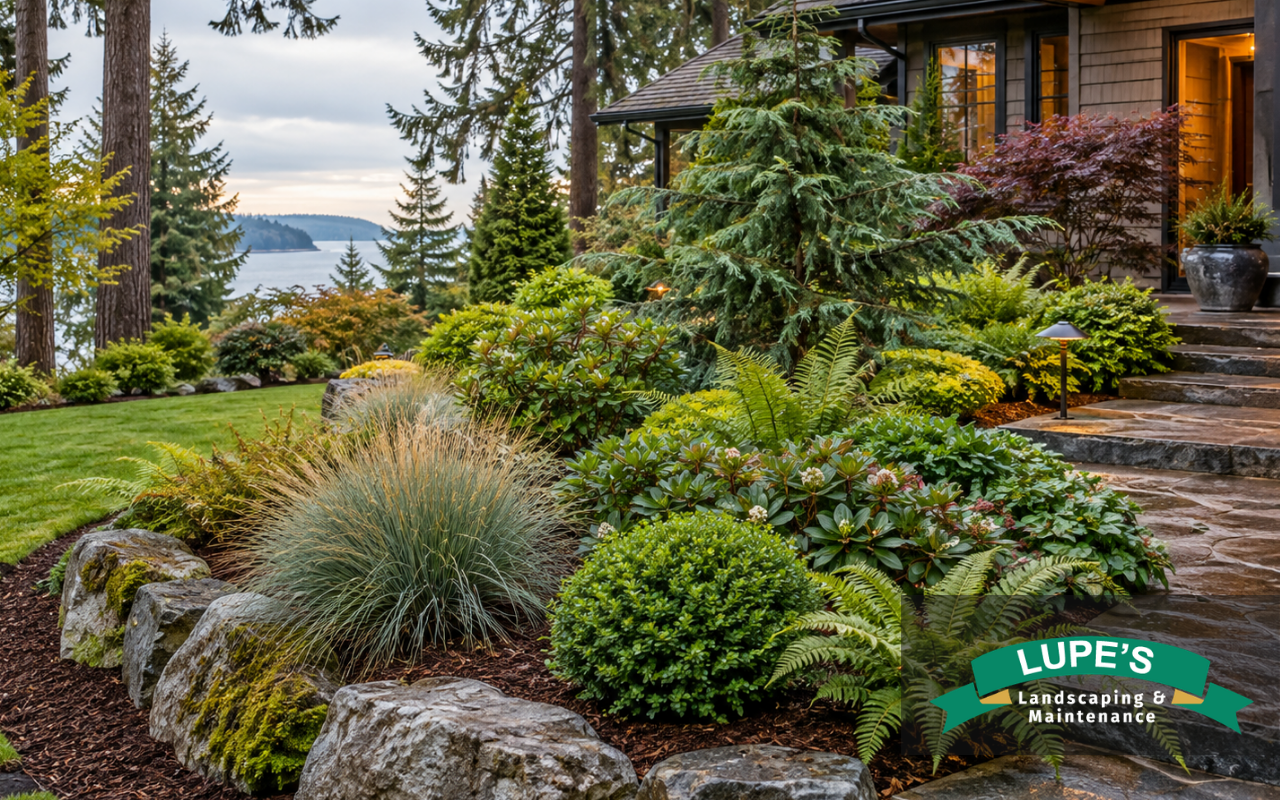
The best landscaping plants for Bainbridge Island are plants that can adapt to local rainfall, seasonal dry periods, shade conditions, and different soil drainage levels. Native plants, evergreen varieties, shade-tolerant plants, and low-maintenance options can all help create a practical and attractive yard.
Choosing plants based only on appearance can lead to unnecessary maintenance later. Sun exposure, drainage, available space, mature plant size, and seasonal conditions should all influence plant selection.
At Lupe’s Landscaping & Maintenance, we recommend considering how each plant will function within the complete landscape rather than selecting varieties individually. If you are planning improvements, talk with our landscaping team about plant choices for your property.
Why Plant Selection Matters on Bainbridge Island
Bainbridge Island landscapes can include sunny areas, shaded spaces, wet sections, and locations that become noticeably drier during part of the year. For that reason, the same plant may not perform equally well throughout an entire property.
Before planting, homeowners should consider sunlight, mature plant size, soil moisture, drainage, and how much maintenance they want to handle throughout the year. Choosing plants around those conditions can help create a more balanced landscape.
Before Choosing Plants, Review
- How many hours of sun the area receives
- Whether the soil drains quickly or stays wet
- How much space each plant will need when mature
- How much pruning, watering, and cleanup you want
- Whether the area needs privacy, color, texture, or structure
Use This Bainbridge Island Plant Selection Guide
A good plant list should connect each option to the right part of the yard. Shade plants, evergreens, native plants, and sunny-area plants can all work well when they match the site conditions.
Best Landscaping Plants by Yard Condition
| Landscape Condition | Plant Type to Consider | Main Benefit | Planning Note |
|---|---|---|---|
| Shaded areas | Ferns, hostas, and shade-tolerant plants | Adds foliage and texture | Confirm whether the area has full shade or partial shade. |
| Year-round structure | Evergreen shrubs and plants | Provides consistent greenery | Plan around mature size before planting near walkways or foundations. |
| Lower-maintenance beds | Native or adaptable plants | Reduces unnecessary upkeep | Match plants to soil moisture and sunlight to limit replacement. |
| Sunny locations | Flowering plants, ornamental grasses, and drought-tolerant varieties | Adds color and seasonal interest | Consider watering needs during drier periods. |
| Moist or poorly drained areas | Plants suited for wetter soil conditions | Helps avoid plant stress | Improve drainage when standing water becomes a problem. |
Best Native Plants for Local Landscaping
Native plants can be useful because they are naturally associated with regional growing conditions. Options such as salal, sword fern, and Oregon grape can work well within certain Bainbridge Island landscapes depending on the site.
Native plants can support a more natural-looking landscape, especially when paired with the right spacing and soil conditions. They can also be combined with evergreen shrubs, ground covers, and flowering plants rather than used exclusively.
If you want to learn more about this approach, explore our guide to native plants for landscaping.
Evergreen Plants Add Year-Round Structure
Evergreen plants are useful when homeowners want greenery and visual structure beyond the flowering season. Depending on available space, evergreen shrubs and other varieties can help define beds, borders, walkways, and foundation areas.
The important consideration is mature size. An evergreen that looks compact when first installed may require considerable space later. This matters near windows, paths, driveways, and entry areas where overgrowth can create future maintenance problems.
Our guide to evergreen plants for landscapes explains additional considerations for year-round planting.
What Plants Work Well in Shaded Areas?
Shaded areas need a different strategy than sunny portions of the yard. Ferns, hostas, and other shade-tolerant plants can provide texture and foliage where plants that require strong sunlight may struggle.
Homeowners should also distinguish between full shade and partial shade. An area receiving several hours of indirect or filtered light may support different plants than a space that stays shaded most of the day.
Review additional shade plants for local gardens before planning these spaces.
Low-Maintenance Plants Can Reduce Routine Yard Work
The best low-maintenance landscaping plants are not plants that require no attention. They are plants placed in conditions that match their light, moisture, and space requirements.
Correct placement can reduce unnecessary pruning, watering, and replacement. Ground covers, native species, adaptable shrubs, and selected evergreen plants can all contribute to lower-maintenance designs.
For a broader landscaping strategy, see our guide to low maintenance landscaping ideas.
Best Landscaping Plants for Sunny Areas
Sunny portions of a landscape often support flowering plants, ornamental grasses, drought-tolerant varieties, and other plants that perform better with stronger light exposure. However, full sun can also increase water demand during drier periods.
Plant spacing and irrigation should therefore be considered alongside appearance. Crowded beds may create unnecessary competition, while plants placed too far apart may not produce the intended landscape effect.
Sunny-Area Planning Tips
- Group plants with similar watering needs.
- Leave enough room for mature growth.
- Use mulch to help manage soil moisture.
- Choose plants that fit the bed size and exposure.
When Is the Best Time to Plant Landscaping?
The best planting time depends on the type of plant, weather conditions, soil conditions, and available irrigation. Some plants establish more successfully during cooler periods, while others may tolerate warmer planting windows when they receive proper care.
Instead of selecting a planting date based only on the calendar, consider the plant variety and site conditions. Newly installed plants generally need closer attention while their root systems become established.
What Plants Should Not Be Planted Together?
Plants should not be grouped together when their requirements conflict significantly. For example, a plant that prefers consistently moist soil may not perform well beside one that requires much drier conditions.
Mature size also matters. Fast-growing shrubs placed too close to smaller plants can eventually block sunlight or overcrowd the bed. Planning around mature growth helps avoid future removal or excessive pruning.
Avoid Pairing Plants With Conflicting Needs
- High-water plants beside drought-tolerant plants
- Full-sun plants in deep shade
- Large shrubs too close to small perennials
- Fast-growing plants near narrow walkways
- Plants with different soil drainage needs in the same bed
Create a Better Planting Plan for Your Yard
The best landscaping plants for Bainbridge Island depend on more than a list of popular varieties. The right combination should reflect your property’s sunlight, drainage, available space, desired appearance, and maintenance goals.
At Lupe’s Landscaping & Maintenance, we can help homeowners plan landscapes around their property conditions and long-term goals. Plan your landscape today and discuss plant selections that fit your outdoor space.
Frequently Asked Questions
What are the best low-maintenance landscaping plants?
Low-maintenance options may include native plants, adaptable evergreen varieties, ground covers, and plants correctly matched to the site’s sunlight and moisture conditions.
What plants grow well in shade?
Ferns, hostas, and other shade-tolerant plants can work in areas with limited sunlight. The best choice depends on whether the location receives full or partial shade.
Should I use native plants in my landscape?
Native plants can be useful because they are associated with regional growing conditions. They can also be combined with other plants to achieve different landscape goals.
Can evergreen plants be used throughout a landscape?
Yes, but mature size, placement, sunlight, and maintenance requirements should be considered before selecting evergreen varieties for specific areas.
How do I choose plants for different parts of my yard?
Compare each area’s sunlight, drainage, available space, moisture conditions, and desired maintenance level before selecting plant varieties.