
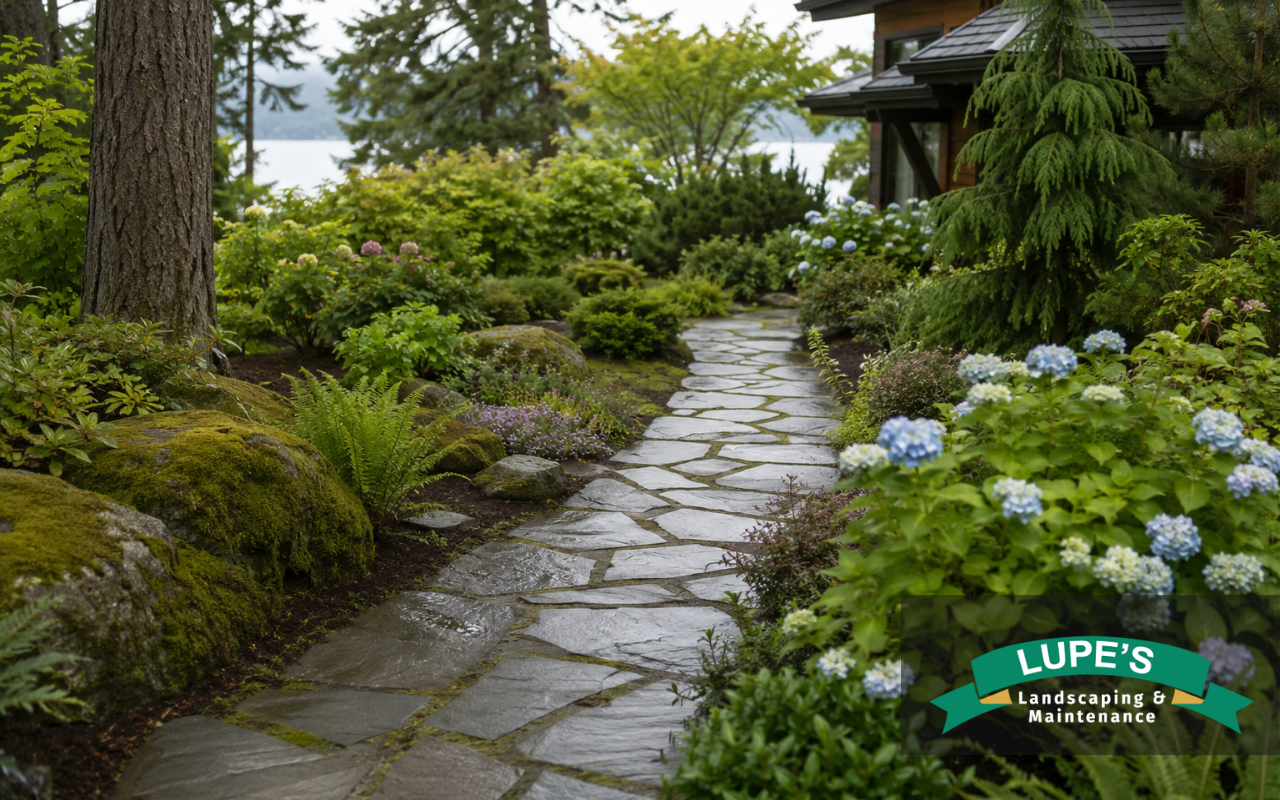
Flagstone can make a garden path feel calm, useful, and connected to the land. These flagstone walkway ideas focus on real choices homeowners face, from stone shape to drainage. For material guidance, visit our page about natural stone for hardscaping.
At Lupe’s Landscaping & Maintenance, we plan walkways around how people actually use their yards. A good path should guide daily movement, handle wet weather, and look like it belongs in the landscape.
Choose Stone That Matches The Setting
The right flagstone depends on your yard style, slope, shade, and foot traffic. A natural stone walkway near a garden bed may need a softer, informal look. A front entry path may need flatter stones and tighter joints for easier walking.
- Use larger, flatter stones for main walking routes.
- Choose irregular stones for a relaxed garden path.
- Pick thicker pieces for areas with heavier use.
- Match stone color to patios, steps, walls, or nearby rock.
For Bainbridge Island yards, gray, tan, and earthy stone tones often sit well beside evergreens, moss, and native planting. You can also explore native stone options when you want the path to feel more rooted in the site.
Shape The Path Around Real Movement
A walkway should not only look good from a photo. It should feel comfortable when someone carries groceries, walks to the garden, or moves between a patio and gate. This is where strong flagstone path design starts.
For example, a curved path works well when it leads through planting beds or around a tree. A straight path works better for a front entry, side yard access, or a clear route from the driveway to the door.
Where Will Water Go After Rain?
Drainage is one of the most important parts of flagstone installation in Bainbridge Island. Rain can settle in low spots, loosen joint material, and make stones shift if the base is not planned well.
- Watch where water already moves after a storm.
- Avoid placing stones in areas that collect standing water.
- Slope the path slightly so water can drain away.
- Use compacted gravel below the stones for better support.
- Keep joints filled so runoff does not wash out the base.
With Lupe’s Landscaping & Maintenance, we look at soil, slope, and nearby hard surfaces before setting the path. This helps the walkway stay safer and more stable through wet seasons.
Use Spacing That Feels Comfortable
Stone spacing changes how the path feels underfoot. Wide gaps can look natural, but they may be hard to walk on if the path is used every day. Tighter joints often work better near entries, outdoor seating, and high-use areas.
A useful test is to walk the planned route before installation. Mark the stone locations with paint, stakes, or loose pieces. If your steps feel forced, the spacing needs adjustment before the final base is built.
Add Details That Improve Daily Use
The best flagstone walkway ideas solve small problems before they become daily frustrations. A beautiful path can still fail the homeowner if it feels uneven, gets muddy edges, or disappears at night.
- Add edging where mulch or soil may spill onto the stones.
- Use low path lights near steps, turns, and entry points.
- Place gravel or ground cover between stones to soften joints.
- Keep planting low near the walking surface to avoid crowding.
Our team at Lupe’s Landscaping & Maintenance often looks for these details early. A small layout change can make a walkway easier to use and simpler to care for later.
Protect The Walkway With Simple Care
Good walkway maintenance starts with regular attention, not harsh cleaning. Sweep leaves before they stain, pull young weeds before roots spread, and rinse muddy areas after heavy use.
Use a mild cleaner and a stiff brush for light dirt. Be careful with strong pressure washing because it can loosen joint material. If moss appears, remove it gently so the stone surface stays safer during wet months.
Frequently Asked Questions
What is the best flagstone style for a front walkway?
Flatter stones with closer joints usually work best for a front walkway. They create a steadier surface and a cleaner entry look. For more material ideas, review our natural stone hardscaping ideas.
Can flagstone be used in shady or damp yards?
Yes, but the base, drainage, and maintenance plan matter. Shady areas may grow moss faster, so the path should be easy to clean and should not hold standing water.
How do I make a flagstone path look natural?
Use gentle curves, varied stone shapes, and planting that softens the edges. Regionally suited materials can also help. Our native stone choices may be useful for this style.
Is a flagstone walkway hard to maintain?
It is not difficult when the walkway is built well. Most care includes sweeping, weed control, joint checks, and gentle cleaning. Broader outdoor planning can be supported through our hardscaping services.
What should I avoid when planning a flagstone walkway?
Avoid uneven stone thickness, poor drainage, awkward step spacing, and narrow turns. These issues can make the path less comfortable and may lead to more maintenance over time.
Build A Path That Supports Your Landscape
When you choose Lupe’s Landscaping & Maintenance, we focus on a walkway that fits the site, not a one-size layout. The goal is a path that looks natural, drains well, and feels comfortable every day.
These flagstone walkway ideas can help you make better choices before work begins. To talk about a natural stone walkway or flagstone installation in Bainbridge Island, contact our team.