
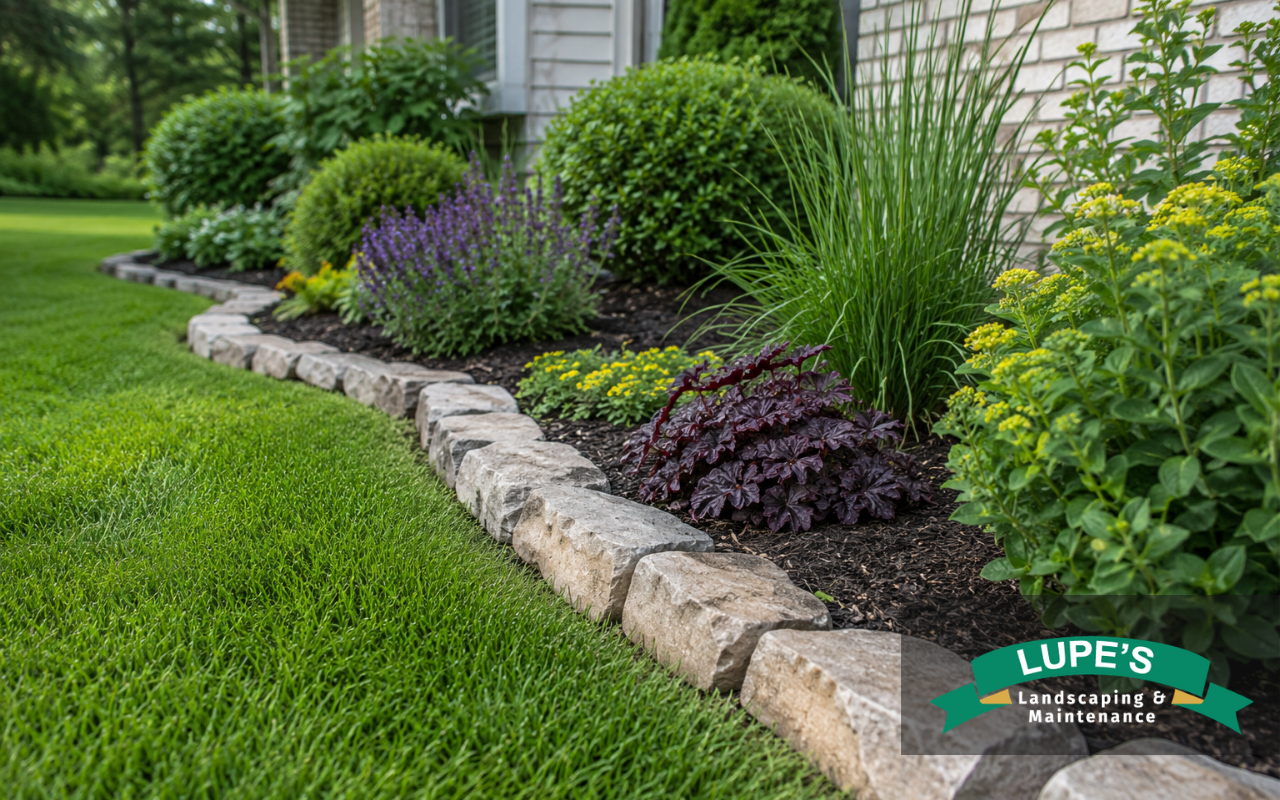
Garden stepping stones can turn a simple yard route into a path that feels calm, useful, and inviting. A well-planned walkway guides each step, protects planted areas, and adds shape to your outdoor space. For more ideas, explore our backyard hardscaping design ideas.
At Lupe’s Landscaping & Maintenance, we look at how people move through the yard before thinking about stone shape or style. A good path should feel natural the first time you walk it, not like something added after the garden was finished.
Choosing Stones That Match Daily Garden Use
The best stones fit both the style of your yard and the way the path will be used. A walkway to a compost area may need wide, stable stones. A quiet path through flowers can use softer shapes with more space between each piece.
Stone thickness, surface texture, and edge shape all matter. Very smooth stones may look clean, but they can feel slick in wet weather. Rougher stone often gives better grip, while flat surfaces help make garden stepping stones easier to walk on.
Which Stepping Stone Layout Fits Your Space?
Stepping stone layouts should follow real movement, not only a drawing on paper. One simple test is to walk the route several times before placing any stone. The path should connect the places you already use, such as a gate, patio, garden bed, or side yard.
With Lupe’s Landscaping & Maintenance, you can plan spacing around a natural walking stride. A straight layout works well for direct access. A gentle curve feels better when the path moves through plants, around a tree, or toward a small seating area.
Natural Stone Garden Paths for Local Character
Stone garden paths often look best when they feel connected to the land around them. On Bainbridge Island, many yards include trees, moss, shade, slopes, and wet soil. A path should respect those conditions instead of fighting them.
Natural stone can work well because mixed shapes and tones feel less formal. It also pairs beautifully with ferns, gravel, native plants, and woodland-style gardens. You can view material ideas through our native stone landscaping ideas.
Decorative Walkways With Purposeful Details
Decorative walkways should add beauty without making the path harder to use. A good detail has a job. Gravel can improve drainage. Low plants can soften edges. Lighting can make evening walks safer. Each choice should support the way the path works.
- Use gravel around stones where water needs room to drain.
- Place low plants near edges, not where feet land.
- Choose larger stones near doors, gates, or busy turns.
- Keep narrow curves simple so the path stays easy to follow.
- Add lighting where steps, slopes, or shaded areas need visibility.
Installing Stepping Stones for Wet Ground
Good installation starts below the stone. If the base is weak, even beautiful stones can rock, sink, or collect water. The path area should be cleared, leveled, and shaped so each stone sits firmly without creating a tripping point.
Stepping stone installation in Bainbridge Island should pay close attention to rain, drainage, and soil movement. Our team at Lupe’s Landscaping & Maintenance can help set stones on a stable base so the walkway feels safe through daily use and seasonal weather.
- Mark the route with a hose before digging.
- Walk the path to check if the spacing feels natural.
- Set each stone slightly above soil level to reduce mud buildup.
- Use sand or gravel under stones to improve support.
- Check for rocking before filling around each stone.
Plants and Lighting That Support the Path
Plants should frame the walkway, not hide it. In shaded areas, ferns and hostas can create a soft green border. In sunnier areas, creeping thyme, sedum, or other low plants can add color and texture without blocking the walking surface.
- Use low plants between stones only where foot traffic is light.
- Keep taller plants back from the path edge.
- Choose outdoor-rated lights for wet weather.
- Place lights near turns, steps, and grade changes.
- Use fewer fixtures in quiet garden areas for a softer look.
Lighting should guide the eye without creating glare. Small path lights can define the route after sunset, while a few uplights near shrubs or trees can make the whole garden feel deeper and more welcoming.
Frequently Asked Questions
How far apart should stepping stones be placed?
Spacing should match a comfortable walking stride. A helpful method is to place stones loosely, walk the route, and adjust before setting them into the ground. This gives a more natural result than using one fixed measurement for every yard.
Can garden stepping stones work in wet areas?
Yes, but the base and drainage matter. A gravel or sand layer can help reduce pooling and shifting. For wet garden settings, our native stone options may support a more natural path design.
Are decorative walkways hard to maintain?
Most decorative walkways need simple care. Sweep leaves, remove weeds by hand, and check for stones that settle after heavy rain. If one stone becomes uneven, it can often be lifted and reset with more base material.
Can stepping stones connect with a patio design?
Yes, stepping stones can connect patios, lawns, garden beds, and side yards in a simple way. For ideas that link outdoor features, visit our backyard hardscaping layouts.
Who can help with stepping stone installation in Bainbridge Island?
When you choose Lupe’s Landscaping & Maintenance, we can help plan a path around your yard’s slope, soil, planting areas, and daily use. You can use our contact page to discuss your walkway project.
Plan a Garden Path That Feels Natural
Garden stepping stones work best when they solve real yard needs. They can guide guests, protect soft soil, reduce worn grass, and create a clear route through planted spaces. The right path should look good and make the garden easier to enjoy.
With Lupe’s Landscaping & Maintenance, you can shape a walkway that fits your home, your outdoor habits, and your local conditions. To start planning a path with comfort and lasting use in mind, schedule garden pathway planning with our team.