
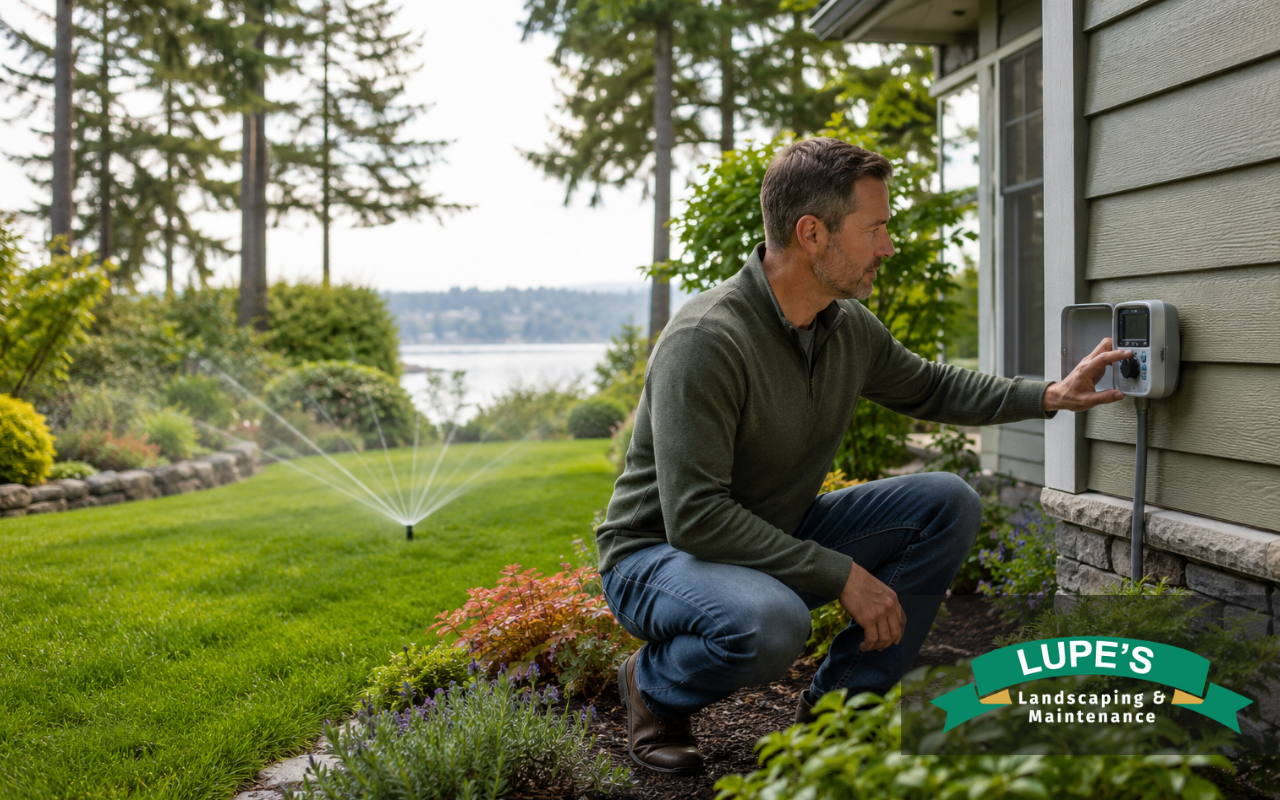
A healthy lawn needs more than good grass and regular mowing. A practical lawn watering schedule helps roots grow deeper, limits wasted water, and keeps your yard ready for seasonal changes.
At Lupe’s Landscaping & Maintenance, we consider local soil, shade, rainfall, and plant needs when planning outdoor care. Our landscaping services can also support a more balanced and useful yard.
Local Factors That Shape Lawn Water Needs
Every yard holds and loses moisture differently. Bainbridge Island weather can bring regular rain, mild temperatures, and occasional dry periods. Your lawn may need less irrigation after rainfall but more support when warm weather dries the upper soil.
Soil type also affects watering frequency. Sandy soil drains quickly, while clay-rich soil may stay wet longer. Slopes, sunny areas, shaded sections, and compacted ground can create different moisture needs within the same property.
- Check recent rainfall before running sprinklers.
- Notice which areas dry faster during sunny days.
- Reduce watering where soil stays soft or soggy.
- Adjust sprinkler coverage around slopes and shaded zones.
How Often Should You Water Your Lawn?
Most established lawns benefit from deeper, less frequent watering rather than short daily sessions. This approach encourages roots to move farther into the soil, where moisture remains available longer.
A useful lawn watering schedule should respond to weather instead of following one fixed setting all year. Check the soil before watering. If it still feels moist a few inches below the surface, your lawn may not need another cycle.
Seasonal Irrigation Timing for Healthier Grass
Seasonal irrigation timing helps you avoid using the same routine during cool, wet months and warm, dry periods. In spring, natural rain may provide much of the moisture your lawn needs. Water only when the soil begins to dry.
During summer, early morning watering gives moisture time to reach the roots before temperatures rise. In fall, reduce watering as growth slows. Winter irrigation is often unnecessary unless the weather remains unusually dry for an extended period.
- Spring: Monitor rainfall and water only when needed.
- Summer: Water deeply during the early morning.
- Fall: Reduce watering as temperatures become cooler.
- Winter: Pause regular irrigation during wet conditions.
Soil and Grass Conditions That Affect Frequency
Grass type, root depth, mowing height, and soil quality all influence watering frequency. A lawn with deeper roots can often handle longer gaps between watering sessions. Newly planted grass may need lighter and more frequent moisture while roots become established.
Compacted soil can block water from reaching the root zone. Aeration and added organic matter may improve drainage and moisture retention. Our team at Lupe’s Landscaping & Maintenance can help homeowners connect lawn care with wider landscape conditions.
For yards that need less irrigation, consider low-water landscaping options that support efficient outdoor water use.
Warning Signs of Too Much or Too Little Water
Your lawn often shows clear signs when the watering routine needs adjustment. Overwatering may leave the ground soft, create puddles, or cause yellow grass. Underwatering may lead to folded blades, dry soil, or footprints that remain visible.
- Yellow areas may point to excess moisture or poor drainage.
- Brown, curled blades may signal dry roots.
- Runoff suggests water is being applied too quickly.
- Persistent puddles may indicate uneven sprinkler coverage.
- Hard soil may need aeration before more watering.
Efficient Tools for Lawn Drought Prevention
Simple tools can improve lawn drought prevention without making lawn care complicated. A rain gauge shows how much natural moisture your yard receives. A soil moisture sensor can help you decide whether another watering cycle is needed.
Smart controllers can adjust irrigation timing after rain or during changing temperatures. Sprinkler heads should direct water toward grass rather than pavement. With Lupe’s Landscaping & Maintenance, you can discuss practical adjustments that fit your property and landscape goals.
Homeowners considering irrigation services in Bainbridge Island can contact our team about irrigation needs and system efficiency.
Frequently Asked Questions
What time of day is best for watering?
Early morning is usually the best time because temperatures are cooler and wind is often lighter. This reduces evaporation and gives grass time to dry before night. For help planning your yard, review our landscaping services.
Should I water my lawn every day?
Established lawns usually do not need daily watering. Deep, spaced-out sessions often support stronger roots. Daily watering may keep roots close to the surface and make grass more sensitive to dry weather.
How can I tell whether the soil is dry?
Push a screwdriver several inches into the ground. If it enters easily and the soil feels moist, watering may not be needed. If the ground is hard and dry, adjust your lawn watering schedule gradually.
Can landscaping reduce my lawn’s water use?
Yes. Plant selection, improved soil, mulch, and smaller lawn areas can reduce irrigation needs. Explore our low-water landscape planning for practical ideas.
When should I ask for irrigation help?
Consider professional help when sprinklers miss sections, create runoff, or continue watering after rain. When you choose Lupe’s Landscaping & Maintenance, we can review your landscape needs. Use our contact page for irrigation support.
Create a Smarter Watering Plan for Your Yard
A reliable lawn watering schedule should change with rainfall, temperature, soil, and grass condition. Regular checks can prevent dry patches, reduce excess watering, and improve irrigation efficiency throughout the year.
With Lupe’s Landscaping & Maintenance, you can take a more practical approach to lawn and landscape care. To discuss local conditions or irrigation services in Bainbridge Island, plan your lawn watering routine with our team.