
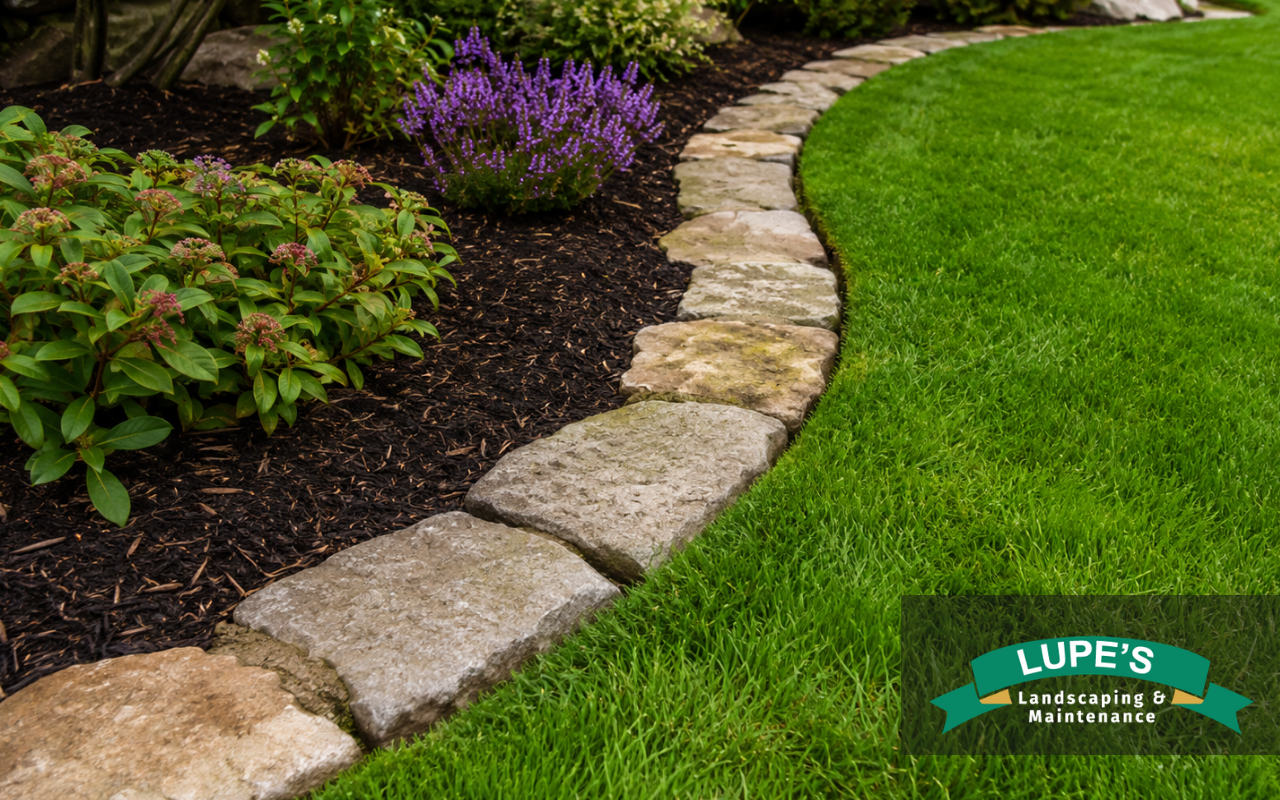
Landscape borders should do more than outline a flower bed. A well-built edge can contain mulch, separate lawn from planting areas, guide foot traffic, reduce erosion, and give the property a finished appearance. Natural stone edging is especially effective on Bainbridge Island because it complements wooded lots, coastal architecture, native planting, and informal garden designs.
Why Choose Stone Borders?
Natural stone offers color and texture that manufactured edging often tries to imitate. Each piece varies slightly, allowing the border to feel integrated with the site rather than added as an afterthought.
- Creates a durable transition between landscape zones
- Supports curved or irregular bed shapes
- Pairs well with gravel, bark, pavers, and native plants
- Can help slow minor surface movement on gentle grades
- Requires no paint or plastic connectors
Stone is not maintenance-free, however. It needs a stable base, appropriate sizing, and enough restraint to remain aligned through wet seasons and ordinary landscape activity.
Comparing Common Edging Materials
| Edging Material | Visual Style | Best Use | Main Limitation |
|---|---|---|---|
| Natural stone | Organic and substantial | Garden beds, paths, and informal borders | Heavier and more labor-intensive to install |
| Concrete edging | Clean and customizable | Defined curves and uniform borders | Can crack if base or drainage is poor |
| Metal edging | Minimal and narrow | Modern beds and tight curves | May shift if anchoring is inadequate |
| Plastic edging | Basic and discreet | Low-cost bed separation | Can lift, warp, or become visible |
| Timber edging | Rustic | Raised or informal garden areas | Wood can deteriorate in damp soil |
Three Natural Stone Edging Styles
Low Flush Border
Stone is set close to grade to create a subtle division between lawn and planting beds. This style supports easier mowing when the top surface remains even and stable.
Raised Garden Border
Larger pieces create a visible edge that holds mulch and adds depth. Raised borders work best when they do not block drainage or direct runoff toward structures.
Informal Woodland Edge
Irregular local-looking stone follows a relaxed curve around ferns, shrubs, and shade plants. The design feels natural but still requires deliberate spacing and base preparation.
Installation Details That Determine Durability
A lasting border begins below the visible stone. The installer should remove loose organic material, establish the intended line, prepare a compacted base where needed, and set each piece so it does not rock.
Drainage matters because saturated soil can allow heavy stones to settle unevenly. On slopes, edging should not be expected to function as a retaining wall unless it is engineered and constructed for that purpose.
🪨 Expert Tip: Use a garden hose or marking line to test curves before excavation. View the shape from the home, street, patio, and main walkway.
Where Stone Edging Adds the Most Value
- Along high-visibility front planting beds
- Between bark mulch and gravel paths
- Around rain-friendly planting areas
- Beside patios that need a softer garden transition
- At commercial entries requiring a durable border
- Around utility areas that need clean visual separation
Common Problems to Avoid
⚠️ Uneven tops: Random height changes may create a tripping or mowing problem.
⚠️ No prepared base: Stone placed directly on loose soil may settle or roll.
⚠️ Trapped water: A continuous border can hold water inside a bed when drainage has not been planned.
⚠️ Oversized material: Large stone can overwhelm a narrow bed or make maintenance difficult.
Local Stone and Bainbridge Island Design
Material color should relate to the home, existing hardscape, and surrounding landscape. Learn more about native stone applications and explore ways to use natural stone in hardscaping.
Work involving significant grading, drainage changes, shoreline areas, or protected site features may require review. Before expanding beds or moving substantial soil, confirm whether the project affects critical areas, hard-surface calculations, or regulated vegetation.
Stone Edging Installation in Bainbridge Island
At Lupe’s Landscaping & Maintenance, we design borders around the actual property rather than forcing every site into the same pattern. With more than 20 years of experience, we understand how material weight, slope, soil, drainage, and maintenance affect the finished installation.
Our licensed and insured team serves residential and commercial clients. Free estimates are available Monday through Saturday from 7:00 a.m. to 7:00 p.m. We accept cash and checks.
Build a Border That Looks Intentional
Natural stone edging can make a simple landscape feel established and complete. The best results come from balanced proportions, stable placement, and a design that works with drainage and everyday maintenance.
Request a free estimate for your Bainbridge Island property.
Frequently Asked Questions
Will natural stone edging move over time?
It can settle if installed over loose soil or poor drainage. Base preparation, stone size, placement depth, and edge restraint all influence long-term stability.
Can stone edging hold back a slope?
A low border may contain mulch on a gentle grade, but it should not replace a properly designed retaining system where meaningful soil pressure is present.
Is stone edging difficult to mow around?
It depends on the design. A flush, stable border can simplify mowing, while a raised or irregular edge may require string trimming.
What stone color works best?
Choose colors that relate to the home, walkways, patio, and nearby materials. Natural variation usually looks best when the overall palette remains consistent.
Do you install stone edging for businesses?
Yes. At Lupe’s Landscaping & Maintenance, we install landscape borders for residential and commercial properties and provide free project estimates.