
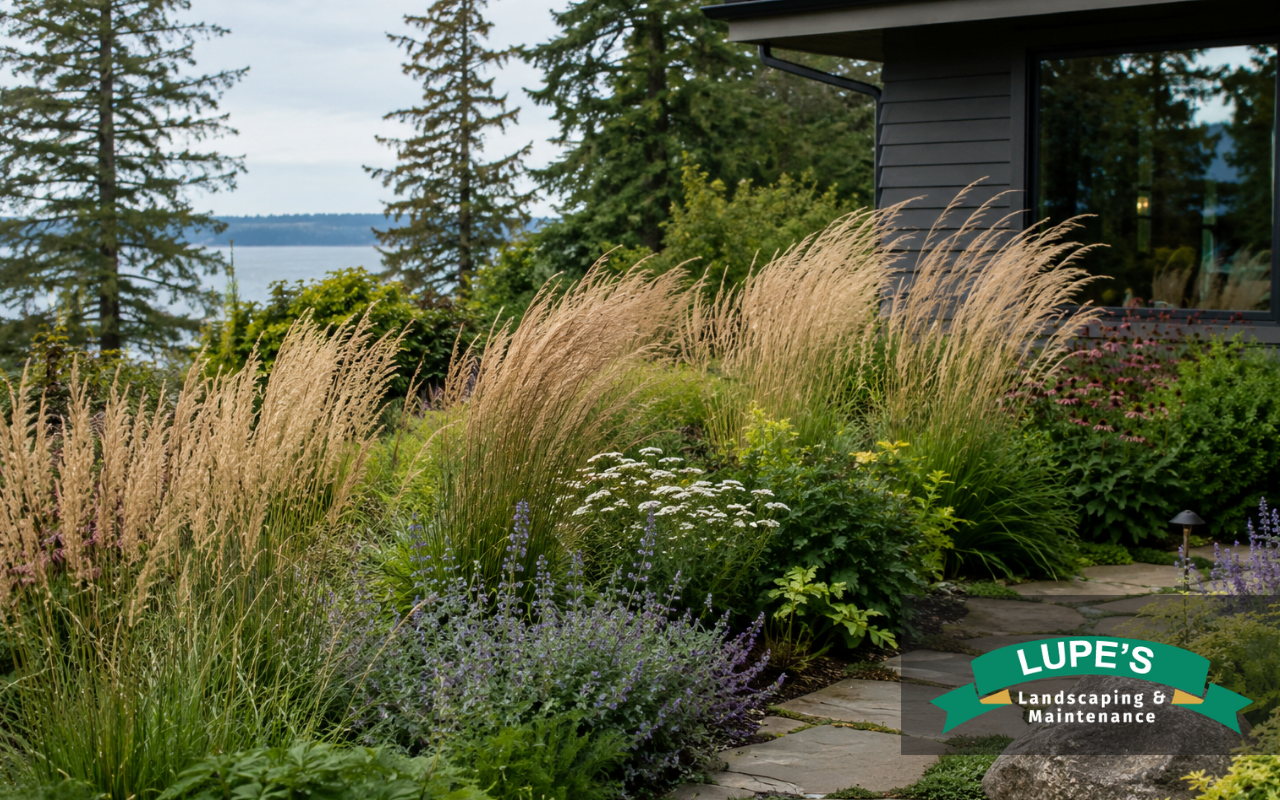
Ornamental grasses can turn a still garden into a living scene filled with soft movement, layered texture, and changing light. At Lupe’s Landscaping & Maintenance, we use these plants to create outdoor spaces that feel natural, polished, and easy to enjoy.
Many varieties also fit well into a thoughtful low-water landscaping plan. Their graceful shapes bring beauty without demanding constant attention, making them useful for busy homeowners and changing Pacific Northwest conditions.
Choosing Grasses for Bainbridge Island Landscapes
The right grass should suit the soil, sunlight, moisture, and scale of your planting area. Some varieties prefer dry, open spaces, while others perform better where the soil stays slightly moist. Mature height and width also matter because a small plant can become a wide, full clump.
Consider these points before selecting a variety:
- Choose clumping grasses when you want controlled, tidy growth.
- Use taller forms to add privacy or soften a fence.
- Select compact types for pathways, borders, and small beds.
- Look for drought tolerant grasses in sunny, well-drained areas.
- Include varieties with seedheads for autumn and winter interest.
A balanced plan may include cool-season and warm-season types. This mix can extend color, movement, and structure through more months of the year.
Designing with Movement, Texture, and Height
Good design begins with contrast. Fine blades can soften stone, wood, and hard garden edges. Wider leaves create a stronger shape, while upright seedheads guide the eye through the landscape. These differences make a planting feel layered rather than flat.
Our team at Lupe’s Landscaping & Maintenance can place ornamental grasses where wind and sunlight show their best qualities. A group beside a patio may create gentle motion, while a taller row can form a calm background behind flowering plants.
Height should change gradually across a planting bed. Tall grasses usually work best toward the back or center. Medium plants can connect the layers, while low decorative grasses define edges without blocking nearby views.
Where Can Grasses Create the Most Impact?
Grasses often make the strongest impression where the landscape needs softness or rhythm. They can frame an entrance, follow a curved walkway, or fill an open bed that feels unfinished. Repeating the same variety in several places also creates visual unity.
Near seating areas, moving blades and seedheads can make the garden feel more peaceful. Along driveways, compact forms can reduce the hard look of pavement. Around boulders or garden art, flowing foliage creates a useful contrast with solid materials.
Mass planting is another effective approach. Several matching clumps create a broad sweep of color and texture that feels simple yet dramatic. This style works especially well in modern, coastal, and natural garden designs.
Planting Grasses for Healthy Long-Term Growth
Proper preparation helps new plants establish strong roots. Clear weeds, loosen compacted soil, and check drainage before planting. The hole should be wider than the root ball, with the crown placed level with the surrounding soil.
Water regularly during the first growing season, even when planting drought tolerant grasses. Once the roots are established, many varieties can manage with less frequent watering. Deep watering is usually more useful than light daily watering because it encourages roots to grow downward.
With Lupe’s Landscaping & Maintenance, you can plan landscape installation in Bainbridge Island around the needs of the site. Careful spacing, soil preparation, and plant placement can prevent crowding and support healthier growth.
Pairing Grasses with Complementary Garden Plants
Grasses become more expressive when paired with plants that have different forms. Rounded shrubs, broad leaves, and bright flowers stand out beside narrow blades. The result can feel natural while still looking carefully planned.
Useful planting partners include:
- Native flowering plants that support local pollinators.
- Evergreen shrubs that provide structure during winter.
- Late-blooming perennials that complement autumn seedheads.
- Low groundcovers that fill gaps and reduce exposed soil.
- Spring bulbs that emerge before grass growth becomes full.
A thoughtful native plant landscaping design can combine grasses with locally suitable plants. This approach creates seasonal variety and may support birds, insects, and other garden wildlife.
Simple Seasonal Care for Lasting Beauty
Many varieties work well in a low maintenance grass design, but a small amount of seasonal care keeps them attractive. Timing matters because cutting too early can remove winter interest, while cutting too late may damage fresh growth.
- In spring, remove old foliage before new blades grow tall.
- During summer, check moisture during long dry periods.
- In autumn, leave healthy seedheads for texture and bird food.
- During winter, allow standing foliage to add shape and movement.
- Every few years, divide crowded clumps to restore healthy growth.
Avoid heavy feeding unless the soil clearly needs improvement. Too much fertilizer can produce weak growth that bends or falls. Simple care, good drainage, and suitable placement usually matter more.
Frequently Asked Questions
Are ornamental grass varieties difficult to maintain?
Most established varieties need only seasonal cutting, occasional division, and water during extended dry weather. For a design that reduces irrigation needs, explore our low-water landscaping solutions.
Which grasses work well in dry garden areas?
Drought tolerant grasses that prefer full sun and well-drained soil are often suitable. The best choice depends on the exact light, drainage, available space, and look you want to create.
Can grasses support birds and beneficial insects?
Dense foliage can provide shelter, while mature seedheads may offer food for birds. Pairing grasses with flowering native plants can create a more complete habitat. Our native plant landscaping approach can help guide those combinations.
Can these plants fit a small landscape?
Yes. Compact decorative grasses can edge a path, soften a patio, or add texture to a small planting bed. Careful spacing keeps the area open and prevents mature plants from crowding nearby features.
When should I request professional landscape planning?
Professional guidance is useful when you need help with variety selection, drainage, spacing, or a complete planting layout. At Lupe’s Landscaping & Maintenance, we can discuss your ideas through our landscape planning contact page.
Bring Graceful Texture Into Your Garden
Ornamental grasses offer an inviting way to add movement, seasonal color, and soft structure to your outdoor space. They can shape pathways, calm busy planting beds, support wildlife, and create strong visual impact with relatively simple care.
When you choose Lupe’s Landscaping & Maintenance, we can help turn these ideas into a landscape that fits your property and daily needs. Use our contact page to plan your Bainbridge Island landscape and create a garden with lasting texture and natural rhythm.