Rain can be hard on yards in Bainbridge Island, especially when water sits near lawns, patios, and planting beds. With smart sustainable landscape design, we can help shape your yard so water moves with purpose.
Outdoor drainage landscaping is about more than keeping grass dry. It protects soil, plants, walkways, and nearby structures from water stress while making your outdoor space easier to enjoy after heavy rain.
Why Yard Drainage Matters in Bainbridge Island
Frequent rain can leave low areas soft, muddy, and difficult to use. When water collects for too long, plant roots may suffer, soil can wash away, and hard surfaces may shift over time.
At Lupe’s Landscaping & Maintenance, we look at how water enters, moves through, and leaves your yard. This helps us plan changes that support healthier soil, safer walking areas, and better long-term function.
A runoff-friendly yard design in Bainbridge Island can also reduce standing water. That means fewer soggy spots, cleaner garden beds, and a more useful space during wet seasons.
Signs Your Yard Has Drainage Problems
Some drainage issues are easy to see after a storm. Others show up slowly through weak plant growth, uneven soil, or wet areas that never fully dry.
- Puddles stay in the same place for more than a day.
- Water moves toward the house instead of away from it.
- Soil washes out near beds, paths, or slopes.
- Grass feels soft, spongy, or thin in wet areas.
- Patios, walkways, or driveways collect standing water.
When these signs appear, outdoor drainage landscaping can help correct the source instead of only covering up the problem.
How Can Rain Gardens Help Manage Runoff?
Rain garden basics start with a shallow planted area that collects water from roofs, slopes, or hard surfaces. The garden holds runoff for a short time, then lets it soak into the soil.
These gardens work best with plants that handle both wet and dry conditions. Native grasses, sedges, and moisture-loving flowers can slow water, support pollinators, and improve the look of wet areas.
Our team at Lupe’s Landscaping & Maintenance can pair rain gardens with rainwater harvesting ideas when your yard needs better ways to collect and guide stormwater.
Smart Grading for Better Water Movement
Grading for landscaping helps guide water away from places where it can cause damage. A gentle slope can move runoff toward safe areas without creating fast water flow or soil loss.
Good grading starts with observation. We check low spots, roof runoff paths, hard surfaces, and the direction of the natural slope. This helps avoid changes that create new wet areas elsewhere.
- Shape soil so water moves away from foundations.
- Fill low areas that collect water after storms.
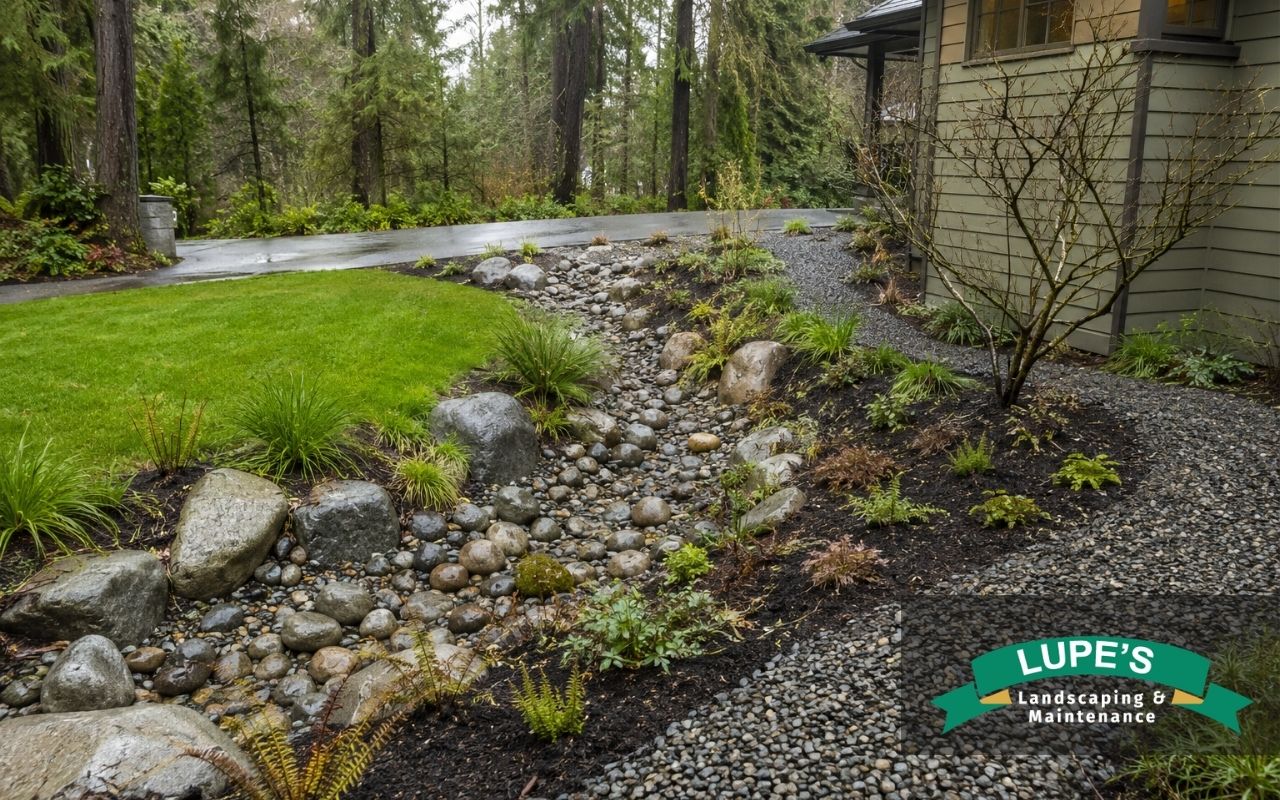
- Use swales to guide water through planted spaces.
- Avoid steep slopes that can cause erosion.
- Connect grading with planting and hardscape plans.
Plants and Surfaces That Support Drainage
The right plants can help manage wet soil. Deep and fibrous roots improve soil structure, hold ground in place, and make it easier for water to move below the surface.
Permeable surfaces also support drainage. Gravel paths, permeable pavers, and planted edges allow rain to soak in instead of running across solid patios or driveways.
When you choose Lupe’s Landscaping & Maintenance, we can connect drainage needs with landscaping services that improve both use and appearance.
Drainage Features That Solve Wet Areas
Some yards need more than plants and grading. Drainage features can collect, slow, or redirect water when runoff gathers in one place or moves too close to outdoor structures.
- French drains can move water below the surface.
- Dry wells can collect runoff and let it soak down.
- Swales can guide water through planted areas.
- Downspout extensions can move roof water away.
- Rock channels can reduce erosion in flow paths.
Drainage landscaping services in Bainbridge Island are helpful when water problems are complex. A planned system can combine several features so each part supports the next.
Frequently Asked Questions
What causes poor drainage in a yard?
Poor drainage often comes from compacted soil, low spots, heavy runoff, or slopes that send water toward the wrong place. A full yard review can show which issue is causing the problem.
Can a rain garden fix standing water?
A rain garden can help when water collects from roofs, slopes, or paved areas. For best results, it should be placed and planted correctly. Our rainwater harvesting services may also support the plan.
Is grading always needed for drainage?
Grading is not always required, but it is useful when water flows toward structures or stays in low spots. A careful plan can improve drainage without making the yard look harsh.
What plants work well in wet areas?
Native grasses, sedges, rushes, and water-tolerant flowers often work well in damp soil. They can be part of a sustainable landscape design that supports beauty and drainage.
When should I ask for professional drainage help?
You should ask for help when water reaches the house, damages paths, or keeps returning after basic fixes. With Lupe’s Landscaping & Maintenance, you can start through our contact page.
Plan a Yard That Handles Rain Better
Outdoor drainage landscaping can turn wet, frustrating areas into cleaner and more useful spaces. With the right mix of grading, plants, permeable surfaces, and drainage features, your yard can handle rain with less stress.
With Lupe’s Landscaping & Maintenance, you get a thoughtful approach built around your land, water flow, and outdoor goals. To improve your Bainbridge Island yard, request drainage landscaping services in Bainbridge Island and start with a practical plan.