
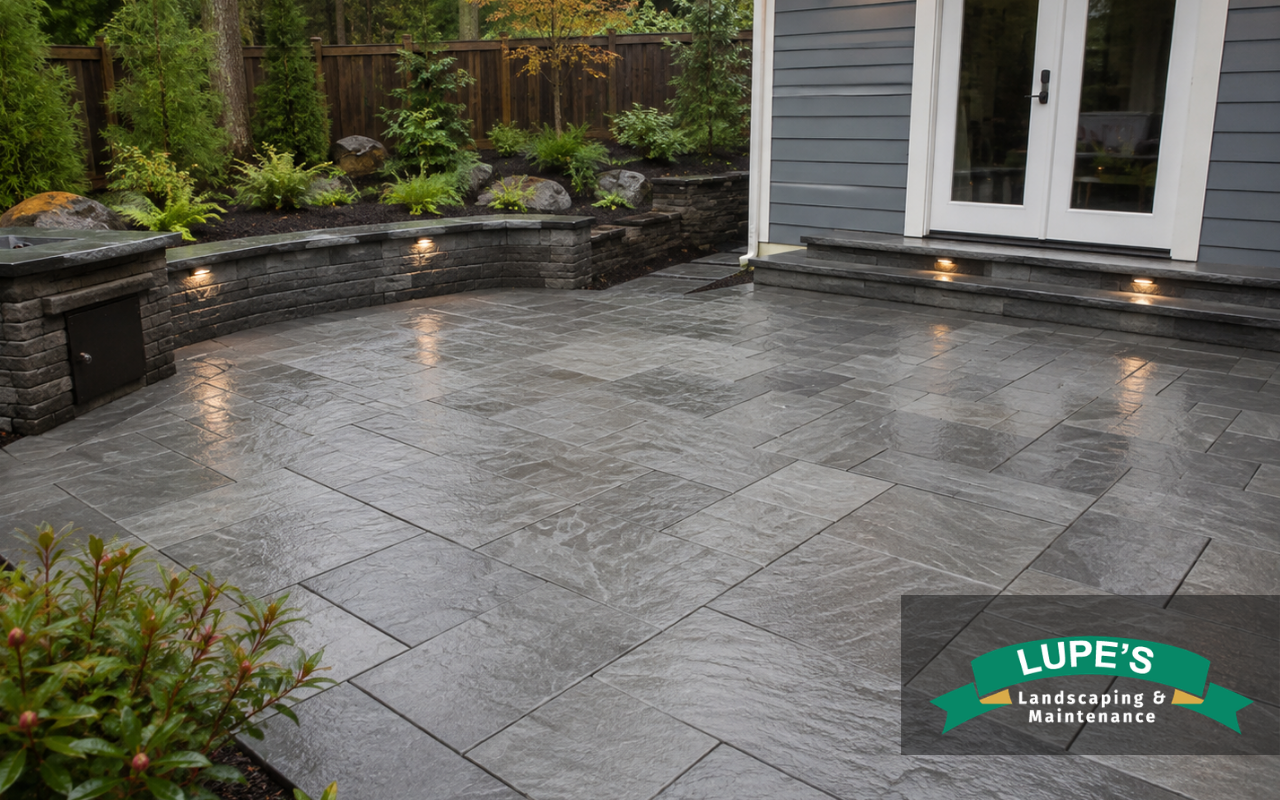
The best patio surface is not simply the material that looks best in a sample. It must fit the property’s drainage, soil, access, maintenance expectations, architecture, and daily use. On Bainbridge Island, outdoor patio flooring also needs to perform through long wet periods, shaded conditions, falling leaves, occasional freezing temperatures, and summer entertaining.
Begin With How You Will Use the Patio
A quiet seating area has different needs than an outdoor dining space, commercial courtyard, fire-feature zone, or route connecting several doors. Before comparing patio surface materials, list the furniture, traffic, cooking equipment, accessibility needs, and maintenance level expected.
Concrete vs. Pavers vs. Natural Stone
| Material | Strengths | Considerations | Good Fit For |
|---|---|---|---|
| Standard concrete | Continuous surface and flexible shapes | Cracks may develop and drainage must be planned | Simple patios and utility-focused spaces |
| Stamped concrete | Decorative patterns and broad color options | Needs skilled installation and surface maintenance | Formal entertaining areas |
| Concrete pavers | Individual units can be repaired or reset | Base, joints, and edging determine performance | Patios with detailed patterns or phased access |
| Natural stone flooring | Distinctive color and organic appearance | Thickness variation can affect installation | Premium gardens and natural settings |
| Permeable pavers | Designed to allow water through open joints | Requires a specialized base and maintenance | Sites where infiltration supports the drainage plan |
Drainage Comes Before Decoration
A patio must direct water away from buildings while avoiding concentrated runoff toward slopes, planting beds, or neighboring property. The surface pitch, base materials, edge conditions, roof discharge, and surrounding grade all work together.
Bainbridge Island reviews new and replaced hard surfaces as part of many development projects. Added patio area can affect stormwater requirements, especially when combined with grading, shoreline jurisdiction, critical areas, or other site changes. Confirm permit needs before removing soil or expanding impervious coverage.
Warning Signs of a Poor Patio Base
- Water remains in low spots after ordinary rainfall
- Pavers rock, separate, or sink
- Concrete has widespread settlement cracks
- Edges spread outward or lose alignment
- Soil washes from beneath the patio
- Doors or steps meet the patio at unsafe heights
Comfort and Safety in a Wet Climate
Texture affects traction. Highly smooth or sealed surfaces may become slippery with water, moss, or organic debris. Color also affects glare and heat during sunny weather. A patio installation in Bainbridge Island should balance appearance with safe walking conditions and realistic cleaning needs.
🌧️ Expert Tip: Evaluate patio samples when they are wet, not only when they are clean and dry. Texture and color can look very different after rain.
How Material Choice Affects Maintenance
Concrete
Concrete should be cleaned without aggressive methods that damage the surface. Joints, cracks, drainage, and any coating need periodic inspection.
Pavers
Joint sand, edging, settlement, and surface growth should be monitored. Individual units can often be reset, which is an advantage when repairs are localized.
Natural Stone
Stone may need specialized cleaning and compatible joint materials. Some varieties absorb more moisture or show staining more readily than others.
Planning the Patio Around the Entire Yard
A patio should connect logically to doors, walkways, lawn, planting areas, and service routes. Review our patio services and our guide to the best materials for Kitsap patios for additional planning ideas.
The layout should also preserve room for drainage maintenance, planting growth, outdoor furniture, and safe movement. A patio that fills every available space may feel crowded and send too much runoff to a single area.
Frequently Asked Questions
Are pavers better than concrete for a patio?
Neither is always better. Pavers allow localized repairs, while concrete creates a continuous surface. Budget, drainage, design, maintenance, and site access should guide the choice.
What patio material is least slippery?
Traction depends on surface texture, finish, slope, cleaning, moss, and moisture. Test materials wet and choose a finish intended for exterior walking surfaces.
Can a new patio improve yard drainage?
It can be integrated into a better drainage plan, but poor slope or discharge can worsen runoff. Grading and water movement must be designed before installation.
Do patios require permits on Bainbridge Island?
Requirements depend on size, hard-surface totals, grading, drainage, shoreline location, and critical areas. Confirm the project with the City before construction begins.
Do you install commercial patios?
Yes. At Lupe’s Landscaping & Maintenance, we install and improve residential and commercial patios and provide free estimates for suitable projects.
Residential and Commercial Patio Installation
At Lupe’s Landscaping & Maintenance, we build patios around site conditions and intended use. With more than 20 years of experience, we understand that excavation, base preparation, compaction, drainage, material layout, and edge support determine how the finished surface performs.
We are licensed and insured and serve both residential and commercial clients. Free estimates are available Monday through Saturday from 7:00 a.m. to 7:00 p.m. We accept cash and checks.