
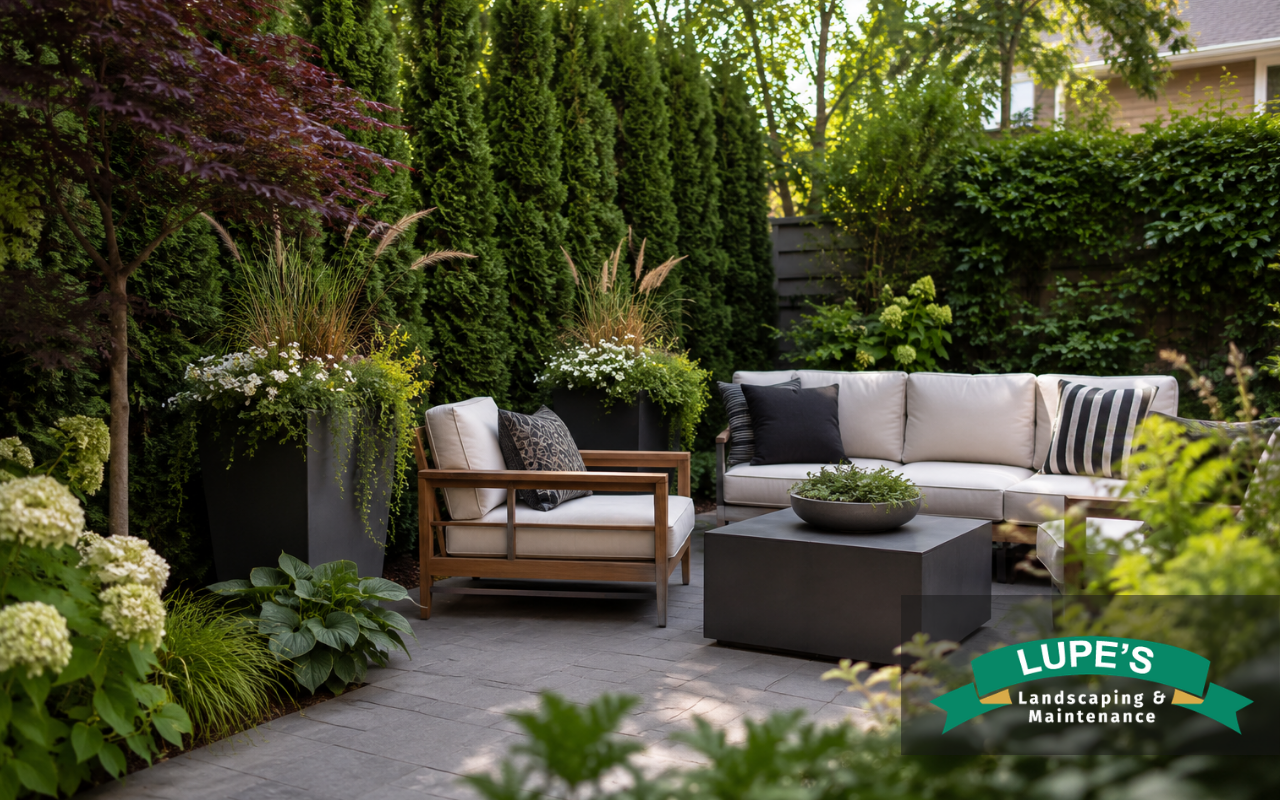
A well-planned patio border can turn a plain paved area into a connected outdoor space. Thoughtful patio border landscaping adds definition, softens hard edges, and creates a smooth transition between the patio, lawn, and garden.
At Lupe’s Landscaping & Maintenance, we consider how each border supports the full outdoor layout. Explore our patio design and installation options to see how strong planning can improve comfort, movement, and visual balance.
How Patio Borders Shape Outdoor Living
Patio borders create a clear frame around seating, dining, and walking areas. They can separate the patio from planting beds without making the space feel closed. Good patio border landscaping also guides the eye toward garden features and helps the patio feel connected to the rest of the yard.
A border can be narrow and simple or wide enough for layered planting. The right choice depends on the patio size, nearby paths, drainage needs, and the style of the home. A balanced layout should add detail without reducing useful space.
Choosing Materials for Clean, Lasting Edges
Border materials should match the patio surface and surrounding landscape. With Lupe’s Landscaping & Maintenance, you can consider how texture, shape, and maintenance needs affect the finished design. A stable base is also important because it helps edging stay level and prevents materials from spreading.
- Natural stone creates an organic edge that works well with garden beds and informal patios.
- Brick adds a neat, traditional line and can repeat colors used around the home.
- Concrete edging provides a clean shape for modern or simple outdoor layouts.
- Metal edging creates a thin border that keeps gravel, soil, and plants contained.
- Timber adds warmth but may need more care in damp outdoor conditions.
Patio Edging Plants That Soften Hardscape
Patio edging plants reduce the sharp contrast between paving and garden areas. They can add color, texture, and gentle movement without blocking walkways. In patio border landscaping, plant size matters because wide or fast-growing choices may spread onto the patio and make the edge difficult to maintain.
- Low ground covers can fill narrow borders and create a soft green transition.
- Compact ornamental grasses add texture while keeping a light, open appearance.
- Small flowering plants bring seasonal color close to seating areas.
- Evergreen shrubs provide structure and keep the border defined throughout the year.
- Herbs can add scent and useful greenery when sunlight and drainage are suitable.
Use repeated plant groups instead of placing many unrelated varieties together. Repetition makes the border feel calm and planned. It also connects separate sections of the patio landscaping while allowing one or two accent plants to create interest.
How Should Patio Borders Guide Movement?
A patio border should support natural movement between doors, seating areas, lawns, and garden paths. It should not create tight corners or place tall plants beside busy walking routes. When you choose Lupe’s Landscaping & Maintenance, we look at how people will enter, use, and leave the patio.
Wider openings can make the space feel welcoming, while border stones can mark changes between activity zones. Curved edges often create a relaxed garden feel. Straight lines usually suit formal homes, modern patios, and layouts where clear visual order is important.
Stone Edging, Drainage, and Visual Balance
Border stones provide a firm visual line and help hold soil or gravel beside the patio. Their size should relate to the paving. Large stones may overpower a small patio, while very small pieces can look busy around a wide surface.
Drainage should be considered before installing any border. Patio border landscaping must allow water to move away from paved areas and nearby structures. Gravel beds, suitable soil levels, and open planting areas can support water flow when they are included in the layout from the beginning.
Color also affects the final result. Stones that closely match the patio create a quiet, unified look. A slightly different tone can highlight the border without making it feel separate from the main outdoor design.
Lighting and Vertical Features for Small Spaces
Small patios can gain depth through lighting and vertical elements. Our team at Lupe’s Landscaping & Maintenance can plan these features so they support the border instead of making it feel crowded. The goal is to add function while keeping the main patio open and comfortable.
- Low path lights can mark edges and improve visibility near steps or walkways.
- Lights placed near textured stone can create soft shadows after dark.
- Trellises can support climbing plants where ground space is limited.
- Narrow planters can add height without taking over seating areas.
- Vertical planting can also create privacy near neighboring views.
Keep lighting simple and evenly spaced. Too many fixtures can distract from the patio design. Vertical features should also match the scale of the space and leave enough room for plant growth and regular care.
Frequently Asked Questions
Which materials work best for patio borders?
The best material depends on the patio style, desired maintenance level, and surrounding landscape. Natural stone works well for organic designs, while concrete and brick create more defined lines. Review our concrete and stone landscaping options for ideas that can complement different patio surfaces.
How wide should a planted patio border be?
The border should be wide enough for mature plant growth without reducing walking or seating space. Narrow borders suit ground covers and compact plants. Wider beds can support layered planting with low plants in front and taller choices behind them.
Can border stones improve patio drainage?
Border stones can support drainage when they are installed with a suitable base and correct slope. Gravel or open planting areas beside the stones may help water move away from the patio. Our professional patio planning services can address drainage as part of the full layout.
What plants are suitable beside a patio?
Good choices stay within the available space and suit the site’s light, soil, and moisture. Compact grasses, low ground covers, small flowering plants, and structured evergreens can all work well. Avoid plants with aggressive roots, sharp leaves, or growth that blocks paths.
When should I contact a patio contractor in Bainbridge Island?
Contact a contractor when the project involves grading, drainage, stone installation, or a complete patio redesign. At Lupe’s Landscaping & Maintenance, we can review the space and discuss practical border options. Use our contact page for patio landscaping questions.
Plan a Patio Border That Fits Your Home
A strong border should support the way you use your patio and connect naturally with the wider landscape. Plants can soften hard surfaces, while border stones create order and definition. Together, these details make patio border landscaping feel intentional rather than added after the patio is complete.
When you choose Lupe’s Landscaping & Maintenance, we consider materials, movement, planting space, and the character of your property. Share your ideas through our patio border design contact page and begin planning an outdoor space that feels balanced, useful, and connected.