
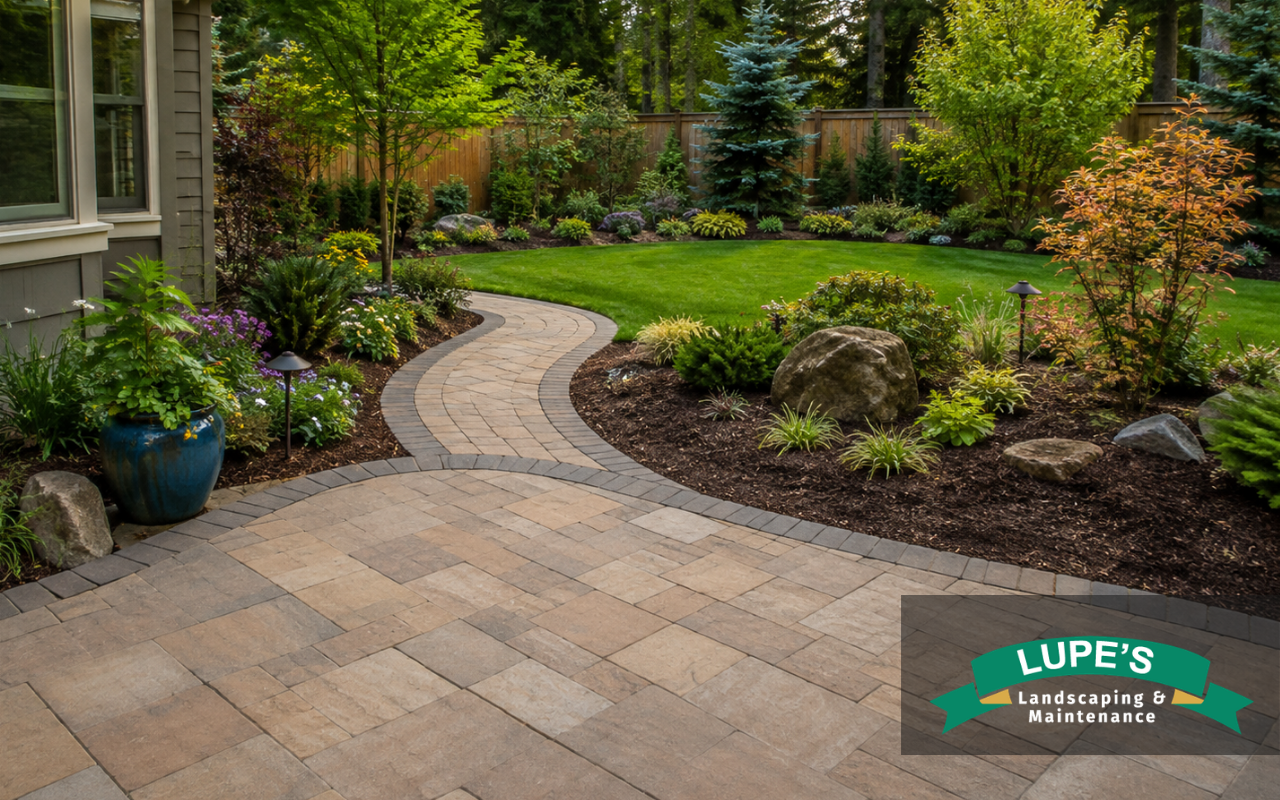
A patio can be beautifully built and still feel disconnected from the rest of the yard. Abrupt edges, awkward steps, narrow paths, and poorly placed planting beds often make people move around the outdoor space instead of through it. The best patio transition ideas create a natural sequence from the home to seating, walkways, lawn, and garden areas.
Think in Experiences, Not Separate Features
Instead of treating the patio, path, and garden as independent projects, imagine how a guest moves through the property. Where do they pause? Which route feels obvious? Can someone carry food from the kitchen without crossing wet grass? Does the patio offer a clear view toward the garden?
Six Ways to Improve Outdoor Flow
1. Use a Wider Landing at Doors
A small landing can make a full-size patio feel cramped at the most important connection. Allow room for the door swing, traffic, and furniture before narrowing into the main space.
2. Repeat Materials
Carry one patio material into walkway borders, steps, or garden accents. The material does not need to cover every surface; small repetitions create visual continuity.
3. Add Connecting Walkways
Walkways should link real destinations such as gates, sheds, gardens, driveways, and secondary seating. A decorative path that ends without purpose can make the yard feel confusing.
4. Soften the Patio Edge
Curved planting beds, low borders, gravel bands, or groundcovers can reduce the hard visual break between paving and garden.
5. Use Grade Changes Carefully
Steps, seat walls, and terraces can create attractive transitions, but they must remain safe, visible, and compatible with drainage. Uneven improvised steps are a common hazard.
6. Frame a View
Place the transition so it leads toward a specimen plant, water feature, fire area, or garden focal point. A visible destination makes the route feel intentional.
Patio-to-Garden Design Comparison
| Transition Style | Best For | Design Benefit | Watch For |
|---|---|---|---|
| Stepping-stone path | Informal gardens | Light visual footprint | Uneven spacing or unstable stones |
| Full-width paver walk | Frequent daily use | Clear, accessible connection | Added hard-surface and runoff impacts |
| Gravel band | Drainage-friendly edges | Softens paving and adds texture | Material migration without edging |
| Planted border | Garden-focused yards | Creates seasonal color and softness | Plants blocking traffic at mature size |
| Low seat wall | Entertaining patios | Defines space and adds seating | Footing, drainage, and height requirements |
Correct Problems Before Remodeling
- Standing water between the patio and lawn
- Settled pavers at doors or steps
- Paths that become muddy during winter
- Loose gravel spilling onto walking surfaces
- Drainage directed beneath or across the patio
- Planting beds that narrow primary routes
A patio remodeling project in Bainbridge Island should correct these issues before adding decorative elements. New borders cannot compensate for unstable soil or poor water movement.
Design for Bainbridge Island Seasons
Outdoor flow changes with the weather. During dry summer days, a lawn route may seem acceptable. In winter, the same route can become muddy and slippery. Connecting walkways and firm transition zones make the yard more useful year-round.
🧭 Expert Tip: Walk the proposed route while carrying a tray, garden tools, or waste bins. This simple test reveals tight corners and inconvenient turns.
Permit and Drainage Considerations
Expanding a patio or adding new hard surface can affect stormwater planning. Work involving grading, shoreline areas, slopes, retaining features, or critical areas may need City review. Plan the full connected layout before submitting permits or ordering material.
For additional inspiration, review our modern patio design ideas and our guide to creating a backyard oasis.
Frequently Asked Questions
How wide should a walkway from the patio be?
Width depends on use. A frequently used route should allow comfortable movement and furniture or equipment access, while a secondary garden path can be narrower.
How can I soften a straight patio edge?
Add a curved planting bed, stone border, gravel strip, low groundcover, or a change in paver pattern. Preserve drainage and adequate walking space.
Can I connect a patio to the garden with stepping stones?
Yes, when stones are stable, evenly spaced, and suited to the traffic level. Heavily used routes may perform better with a continuous walkway.
Should patio transitions match the patio material?
They do not need to match exactly. Repeating a color, border, stone type, or pattern can create continuity while allowing the transition to feel distinct.
Do you remodel commercial patio connections?
Yes. At Lupe’s Landscaping & Maintenance, we improve residential and commercial outdoor flow, walkways, patio edges, and connected landscape areas.
Make Every Part of the Yard Feel Connected
A strong patio transition guides movement naturally while improving safety, appearance, and daily use. Small changes in width, material, planting, and alignment can make the entire outdoor space feel larger and more organized.