
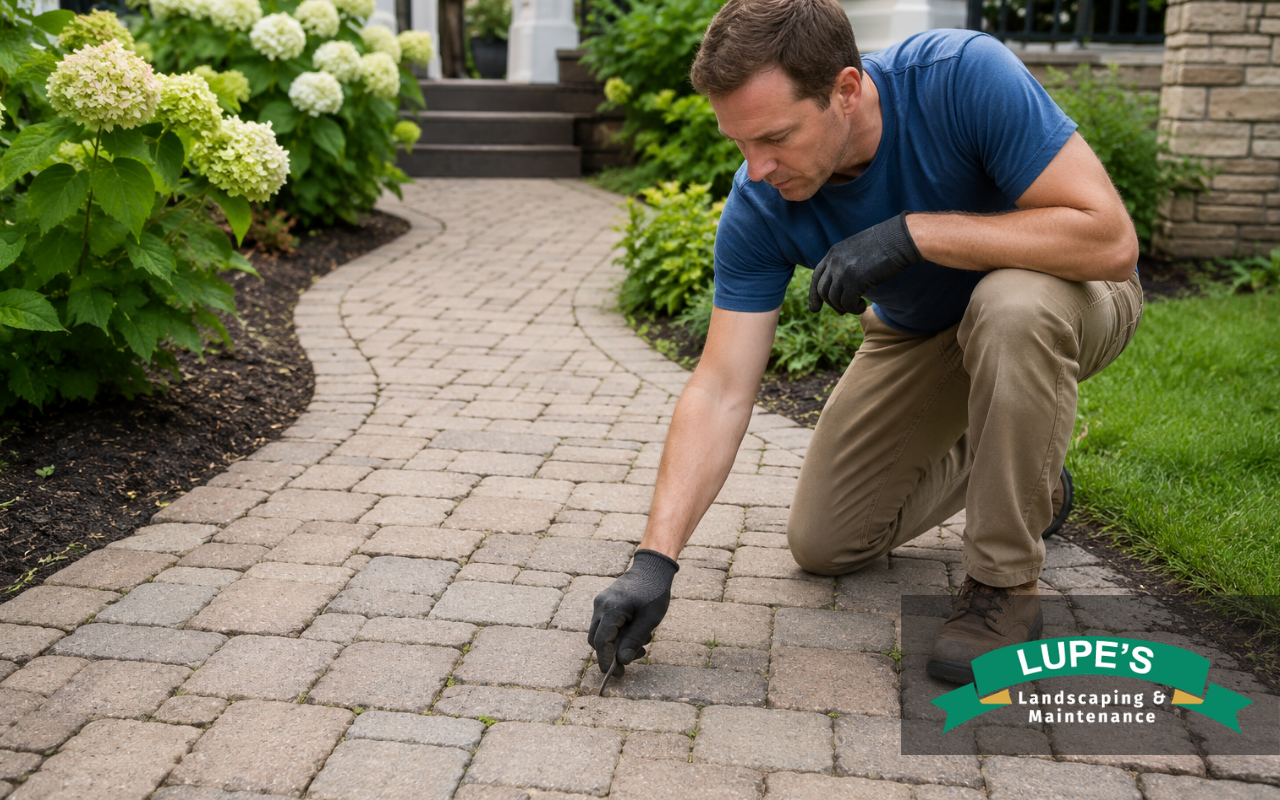
A paver walkway adds structure, beauty, and a welcoming path to your property. However, rain, foot traffic, moss, and shifting soil can slowly affect its surface. Regular paver walkway maintenance helps prevent small concerns from becoming expensive or difficult repairs.
At Lupe’s Landscaping & Maintenance, we understand how local outdoor conditions can affect paved areas. A simple care routine can protect your walkway and nearby hardscaping features while keeping the entrance to your home clean, stable, and inviting.
Why Does Regular Walkway Care Matter?
Routine care protects both the appearance and structure of your walkway. When joint sand disappears, pavers may move under pressure. Open joints also collect dirt, seeds, and moisture, creating better conditions for weeds and moss.
Consistent paver walkway maintenance also makes it easier to notice loose stones, stains, and low areas. Early action can reduce water damage, surface wear, and safety concerns. It also supports the long-term condition of your wider outdoor hardscape.
Signs Your Pavers Need Prompt Attention
Walk through the area every few weeks and look closely at the joints, edges, and walking surface. Small changes can show that cleaning, sanding, or repair is needed.
- Weeds or moss are growing between the pavers.
- Joint sand is low, missing, or washing away.
- Individual pavers move when stepped on.
- Water collects in low or uneven areas.
- Dark stains or surface buildup remain after sweeping.
- Edges are spreading or losing their original alignment.
A quick inspection after heavy rain is especially useful. Water movement often reveals drainage concerns, weak joints, or settling areas that may not be clear during dry weather.
Weed Prevention Between Paver Joints
Effective weed prevention begins with full, stable joints. Seeds often settle in loose dirt between pavers rather than growing from deep below the walkway. Regular sweeping removes this material before roots can become established.
Our team at Lupe’s Landscaping & Maintenance recommends removing young weeds before they spread. Pull the full root when possible, then clear the open joint before adding fresh sand. Avoid harsh products that may affect nearby grass, flowers, or soil.
Polymeric sand may help reduce future growth when it is suitable for the walkway. It binds after careful watering and creates a firmer joint. Correct preparation matters because poor installation can leave residue or weak sections.
Joint Sand Replacement Step by Step
Joint sand replacement supports the sides of each paver and limits unwanted movement. Complete this task after cleaning and before applying any compatible sealer.
- Wait for a dry day and remove furniture or planters.
- Sweep away leaves, dirt, and loose joint material.
- Clean the joints without disturbing the paver base.
- Allow the walkway and joints to dry completely.
- Spread the correct sand across the surface.
- Sweep the sand into every joint until evenly filled.
- Compact the area when required by the product instructions.
- Remove excess material before carefully applying water.
Do not overfill the joints or leave sand across the paver faces. Follow the sand manufacturer’s directions for watering and curing. Keep people and pets away until the surface is ready for use.
Safe Cleaning and Pressure Washing Methods
Regular sweeping is the safest first step for removing soil and organic material. For deeper cleaning, use a paver-safe solution that matches the type of stain. Test any cleaner on a small, hidden area before treating the full walkway.
Pressure washing pavers requires control. A strong or narrow spray can remove joint sand, mark the surface, or expose the base. Use a lower setting, maintain a steady distance, and keep the nozzle moving in even passes.
With Lupe’s Landscaping & Maintenance, you can get practical guidance when cleaning reveals drainage or surface concerns. Some walkways may also benefit from permeable paver solutions that support better water movement.
Seasonal Paver Maintenance Checklist
A seasonal schedule makes paver walkway maintenance easier to manage. Bainbridge Island moisture can encourage moss, joint erosion, and surface buildup, so inspections should follow periods of heavy rain or changing weather.
- Spring: Remove winter debris, inspect joints, and clean mild stains.
- Summer: Check for loose pavers and complete dry-weather repairs.
- Fall: Sweep away leaves before they trap moisture and decay.
- Winter: Use gentle snow tools and avoid damaging metal edges.
- After storms: Check for standing water, washed-out sand, and movement.
- Throughout the year: Pull weeds early and keep walkway borders clear.
Use plastic tools rather than sharp metal blades when clearing the surface. Before applying ice-control products, confirm that they are suitable for your specific pavers and joint materials.
Frequently Asked Questions
How often should a paver walkway be cleaned?
Light sweeping can be completed whenever dirt, leaves, or seeds collect. A deeper cleaning may be useful once or twice each year, depending on shade, moisture, and foot traffic. Homes with drainage concerns may benefit from reviewing permeable paver options.
Can pressure washing damage walkway pavers?
Yes. Excessive pressure can mark the pavers and remove supporting sand. Use a wide spray pattern, moderate pressure, and steady movement. Avoid aiming directly into the joints for long periods.
When should joint sand be replaced?
Replace it when the joints look low, pavers begin moving, or weeds repeatedly appear. Sand may also need attention after deep cleaning. Professional hardscaping support can help identify deeper base or edge problems.
Should every uneven paver be replaced?
No. A sound paver can often be lifted, the base corrected, and the same unit reinstalled. Cracked or badly damaged pieces may require replacement. Timely paver repair in Bainbridge Island can help restore a safer, more even surface.
When is professional paver maintenance helpful?
Professional support is useful when several pavers move, water collects, stains remain, or joints repeatedly fail. When you choose Lupe’s Landscaping & Maintenance, we can review the visible concerns. Use our contact page to describe your walkway.
Keep Your Walkway Stable and Welcoming
Preventive care keeps your walkway cleaner, safer, and easier to manage. Focus on sweeping, weed control, careful washing, joint sand replacement, and early repairs. These simple steps reduce movement, stains, open joints, and long-term surface damage.
At Lupe’s Landscaping & Maintenance, we take a practical approach to outdoor surfaces. For help with paver walkway maintenance or paver repair in Bainbridge Island, contact our team about your walkway and the concerns you have noticed.