
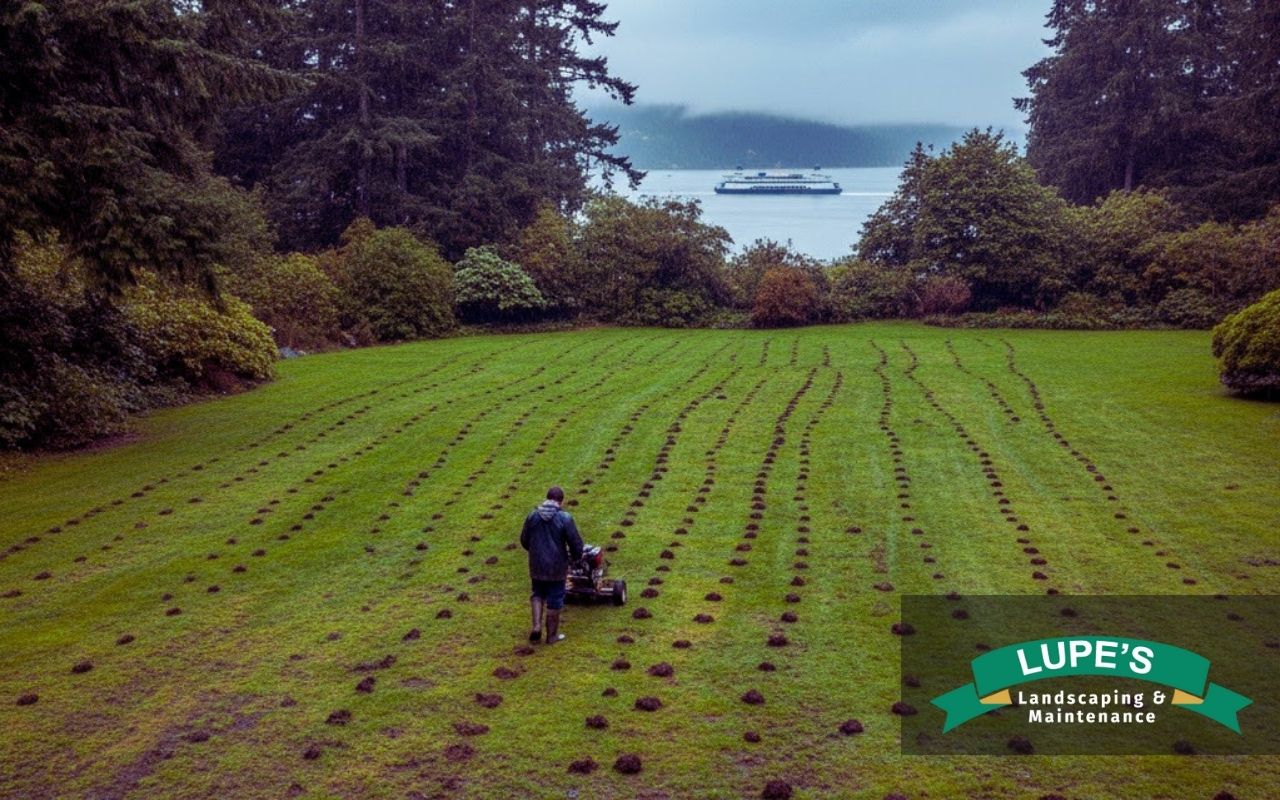
Get your yard ready for months of drizzle with practical, low-stress steps. Rainy Season Lawn Care in Bainbridge Island focuses on drainage, soil health, and hardy grass blends that handle steady showers. Protect roots, prevent mud and moss, and keep rich green color all year with routines built for our local climate and neighborhood conditions from fall through late spring.
Why rainy care matters
Frequent rain can drown roots, spread disease, and build thatch. Prevention saves time and money later. Rainy Season Lawn Care in Bainbridge Island keeps grass strong and tidy.
Balanced routines stop mud, fungus, and pests. Improve drainage, aerate compacted soil, and mow at the right height. These steps protect color and thickness.
Know the local weather and soil
Bainbridge Island brings mild days and steady showers. Puddles form in low spots, and nutrients wash away. Wet soil holds little air for roots.
Damp shade invites fungus and moss. Test soil, adjust pH, and time work between storms. Tailored choices build a lawn that lasts.
Fall grass aeration tips that work
Autumn is ideal. Cooler air and gentle rain help roots grow. Aeration opens channels for air, water, and food.
- Use a core aerator on moist, not soaked, ground.
- Leave plugs to break down and feed soil.
- Overseed bare spots after aerating.
- Lightly fertilize if soil tests allow.
See Autumn Garden Clean-Up for timing and prep ideas. Rainy Season Lawn Care in Bainbridge Island benefits from steady fall effort.
Smart lawn drainage improvements
Find areas that stay wet a day or more. Thin grass and spongy steps point to trouble. Fixing flow keeps roots healthy.
- Regrade low spots to guide water away.
- Add French drains to move excess water.
- Build a small rain garden for runoff.
- Blend compost to loosen tight soil.
Some fixes are DIY. Complex grading needs a pro. Rainy Season Lawn Care in Bainbridge Island starts with good drainage.
Composting wet leaves: a simple guide
Turn leaf piles into rich compost without slime. Mix carbon and nitrogen well. Shred leaves first to speed breakdown.
- Layer shredded leaves with kitchen scraps or fresh clippings.
- Keep the pile moist, not soaked; cover before heavy rain.
- Turn every one to two weeks for air.
Learn safe handling in How to Remove Leaves from Lawn. For bed health, see Mulching Tips for Fall.
This composting wet leaves guide boosts soil and prevents mats. Rainy Season Lawn Care in Bainbridge Island thrives with better soil.
Moss prevention for lawns
Moss wins in shade, moisture, and acidic soil. Increase light by thinning branches. Improve airflow to dry blades faster.
Test pH. If low, apply lime to reach 6.5–7.0. Dethatch, remove debris, and spot-treat moss with iron sulfate as labeled. Overseed thin zones to outcompete moss.
Choosing grass that handles rain
Pick blends that love moisture and some shade. Fine fescue fits shade and needs less water. Perennial ryegrass sprouts fast. Tall fescue roots deeply for strength.
Seed in fall for strong starts. Mix types for traffic and disease balance. Keep soil lightly moist until seedlings reach two inches.
Mowing and trimming during wet months
Raise blades to 3–3.5 inches. Taller grass shades soil and grows deeper roots. Avoid mowing on soaked ground.
Keep mower blades sharp. Clear clumps often. Mulch clippings only when they crumble. Bag if mats form in damp areas.
Watering wisely between storms
Check soil two inches deep. If dry, water deeply and less often. Skip watering before big rain.
Water early morning to dry blades by night. Use rain sensors on irrigation for easy control. This reduces fungus risk and saves water.
Frequently Asked Questions
How often should I aerate in fall?
Once each fall is enough for most lawns. Very compact soil may need extra care the next year.
What is the best pH for grass here?
Aim for 6.5 to 7.0. Test yearly and adjust with lime only as needed.
Do French drains need permits?
Simple, small drains often do not, but rules vary. Check local codes before digging.
Can I compost soaked leaves?
Yes. Shred first, mix with greens, and protect the pile from heavy rain. Turn often for air.
How tall should I mow in winter rain?
Keep blades around 3–3.5 inches. Mow only when soil feels firm, not squishy.
Nurturing your lawn through the season
Use fall grass aeration tips, drainage fixes, and a composting wet leaves guide. Add moss prevention for lawns and better grass mixes. Rainy Season Lawn Care in Bainbridge Island delivers year-round color.
Need help or a quote? Contact Us for local support and tailored service. Rainy Season Lawn Care in Bainbridge Island can be simple with expert guidance.