
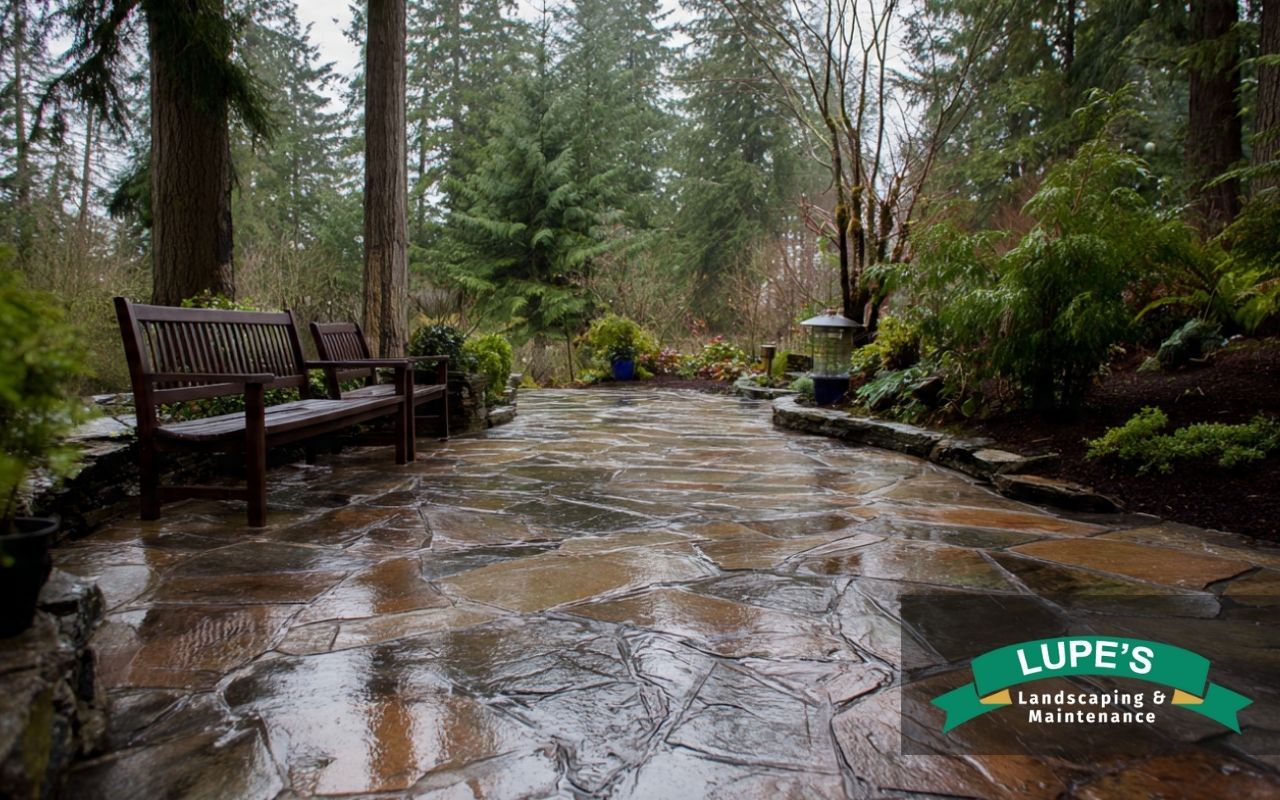
Stone patio winter care in Bainbridge Island helps your outdoor space stay safe, charming, and ready for spring. Living on Bainbridge Island offers beautiful views and also unique challenges, especially when you maintain your outdoor areas through long, wet winters.
As the chill arrives and rain becomes frequent, your stone patio faces a serious test. It is not only about looks; it is about protecting an investment that adds value to your home. How you care for your patio now shapes how it will look and work when warmer days return. There is more to do than simply sweeping leaves.
With a few smart steps, you can protect your stone patio from winter damage. You can choose a de-icer safe for stone, support polymeric sand upkeep, and use simple freeze-thaw checks. In addition, you can apply furniture pad protection so your outdoor pieces and stone surface both stay safe. These ideas help your patio shine again when spring arrives.
Importance of stone patio winter care in Bainbridge Island
Protecting your stone patio against winter weather keeps it useful and attractive during rain, frost, and wind. Coastal breezes on Bainbridge Island carry moisture inland, and that moisture can freeze overnight. If you handle stone patio winter care early, you avoid shifting pavers and eroded joints that create safety risks.
Maintaining a clean surface is the first strong defense against mold, mildew, and algae that love damp winter conditions. Loose dirt and fallen leaves trap moisture, which freezes and thaws again and again, stressing the stone. Regularly clearing debris lets water drain away instead of pooling between stones, where it can start hidden damage.
- First, sweep leaves and needles off the patio each week.
- Next, rinse with a gentle hose spray so dirt does not build up.
- Finally, plan a deeper wash with mild detergent before the first hard freeze.
Planning ahead and following a simple care routine helps your patio weather the cold months. Simple tools such as a good broom, a soft brush, and a stone-safe sealant make a real difference. By keeping your patio in good shape all winter, you welcome spring with rich color and solid joints, ready for quiet mornings outside.
If you are also thinking about longer-term design changes, consider exploring
weatherproof patio designs
that match Bainbridge Island’s coastal climate. This way, day-to-day winter care works together with a smarter patio layout.
Choosing the Right De-Icer for Stone Surfaces
Part of stone patio winter care in Bainbridge Island is choosing ice-melting products that will not stain or weaken the surface. Traditional rock salt may clear ice fast, yet it often leaves white marks and slowly wears away the stone’s finish. Instead, look for a de-icer safe for stone that uses magnesium chloride or calcium magnesium acetate.
These blends work at lower temperatures while staying gentler on pavers and nearby garden beds. When possible, select a pet- and plant-friendly formula, so walkways stay safe without harming landscaping. Always spread the de-icer in light, even layers and sweep away leftover crystals once the ice has melted. Otherwise, residue can build up and dull the stone.
- First, read the label to confirm it is a de-icer safe for stone.
- Then, test a small hidden area before treating the whole patio.
- Finally, store the product in a dry place so it stays effective all season.
Because Bainbridge Island is close to sensitive waterways, it is wise to choose biodegradable blends that break down cleanly. These eco-friendly options support local streams and ponds. By picking a de-icer that is gentle and effective, you help your patio stay safe to walk on while avoiding harsh chemical damage.
Maintaining Polymeric Sand for Patio Integrity
Thoughtful stone patio winter care in Bainbridge Island also means watching the joints filled with polymeric sand. This special sand hardens when moistened, locks pavers in place, and reduces weed growth. Over time, strong rain or wind may wash out some sand, so regular polymeric sand upkeep keeps your stones stable during wet winter weeks.
A simple routine to check the joints can prevent gaps that let water slip beneath the surface. Before the first freeze, sweep fresh polymeric sand into low spots and mist lightly with water to set it. Avoid heavy soaking, which may wash the sand out instead of bonding it. A careful refill seals joints and helps the patio stay level.
- Inspect joints at the start of winter and mid-season.
- Add polymeric sand only where levels have dropped.
- Use a fine mist setting on your hose when activating the sand.
To protect this joint system, avoid harsh cleaning tools or a power washer placed too close to the seams. Gentle scrubbing and light rinsing will protect both the stone and the sand barrier. By checking polymeric sand every few months, you strengthen the patio’s structure and reduce the chance of major winter damage.
Preventing Freeze-Thaw Damage
Regular freeze-thaw checks help you spot small problems before they turn into large cracks. When water seeps into a tiny crevice and freezes, it expands and slowly pushes stones apart. Over many cycles, this pressure causes uneven surfaces, loose stones, and clear gaps. Checking the patio after heavy rains and frosty nights helps you catch trouble early.
Watching the weather forecast can guide your inspection plan. After any cold snap below freezing, take a quick walk around your patio. Carry a soft brush and mild soap to clean areas where ice tends to form. Removing debris lets you clearly see whether stones are shifting so you can repair joints or reset pavers before the next freeze.
Handling small changes quickly prevents water from getting deeper into the base layers. Use leveling sand to fill minor gaps or gently reposition stones that have moved. If a stone cracks, replace it soon to avoid more breakage. Staying proactive with freeze-thaw checks keeps the surface even, safe for walking, and free from large cracks.
Inspecting for Cracks and Structural Issues
Starting each season with a close look at your patio surface reveals weak spots that need repair. Tiny hairline cracks can become larger breaks when they face repeated freezing and thawing. Clear away dirt and moss so you can see the full extent of any damage. Early detection saves time and effort later.
Noticing changes in stone alignment or loose pavers helps you plan repairs before harsh winter storms arrive. Pay careful attention to the edges of your patio where shifting soil is more likely. A gentle tap with a rubber mallet can show you which stones feel loose or unstable. Mark these spots for quick fixes when the weather is dry.
When you act on structural issues, reseat stones on a level base of sand or gravel. Replace pieces that are too damaged with matching stone so your patio keeps a consistent look. Then, seal the repaired joints with polymeric sand to limit further movement. With regular inspections, you keep your patio strong and ready for winter weather.
Protecting Outdoor Furniture on Stone Patios
Shielding your outdoor furniture from rough winter weather keeps it ready for spring and protects the patio surface. Strong wind gusts on Bainbridge Island can tip chairs or slide tables, leaving scratches or dents on the stone. Therefore, secure each piece so it cannot move easily during storms.
- Place heavier tables and benches near walls or corners for shelter.
- Group lighter chairs together so they support each other.
- Move fragile décor items into safer, more protected areas.
Planning ahead for winter storms includes checking how furniture legs touch the stone. Make sure each leg rests on a stable, level spot to avoid rocking. Use furniture pad protection under each leg to spread weight evenly and prevent scratches. With these simple steps, you keep both your seating and stone surface in good condition.
Implementing Weather-Resistant Furniture Pads
Choosing the right pads under chair and table legs adds an important layer of protection between metal or wood and stone. Furniture pad protection reduces scratching while you move chairs or when the wind nudges them. Look for nonslip, weather-resistant pads made for outdoor use so they stay in place on damp stone.
Apply pads before the first strong cold snap so they bond well. Clean each leg base, allow it to dry, then press on the pad firmly. These pads absorb tiny shifts and prevent direct contact that grinds away the stone’s texture. Replacing worn pads at the start of each season keeps this barrier working well.
Check pad condition monthly during winter to ensure they have not shifted or peeled. Press down any loose corners and swap out damaged pads right away. By keeping up this simple habit, you protect your stone patio from small scratches and keep furniture stable and ready for gatherings.
Covering and Storing Patio Furniture in Winter
Covering outdoor pieces with breathable, weatherproof tarps protects them from rain and occasional snow without trapping moisture. Choose covers with vents so condensation does not collect on wood or metal frames. Secure each cover with straps or cords so strong gusts do not blow it away or cause the covered piece to slide on the stone.
Storing smaller or delicate items in a dry, sheltered spot helps them last longer and keeps the patio clear for winter maintenance. Move cushions and lightweight décor into a garage, shed, or weatherproof storage box. Removing clutter prevents water from pooling under covers and reduces mold and mildew on fabrics.
Before covering, gently clean and dry each piece. A quick rinse and wipe remove dust and bird droppings. This extra care keeps finishes looking their best and means less work when spring returns.
Additional Tips for Stone Patio Winter Maintenance
Adding a stone-friendly sealant before the first frost improves water resistance and helps prevent stains from leaves and debris. Always choose a breathable sealant that lets trapped moisture escape. A quick reapplication every couple of years keeps this shield strong and supports your overall stone patio winter care in Bainbridge Island.
Avoid harsh tools such as wire brushes, which can damage the stone’s natural texture. Instead, use soft brushes or push brooms to clear dirt. Gentle cleaning preserves color and avoids tiny scratches where water can collect and freeze. This approach also protects the joints and nearby landscaping.
Using a light dusting of clean sand over the joints early in winter supports polymeric sand upkeep and offers more grip underfoot. This technique helps spread pressure across the patio when ice forms and reduces slipping. For deeper seasonal cleaning ideas, you can review this guide on
cleaning patios in Kingston WA,which also suits Bainbridge Island patios.
Combined with careful de-icer choices and regular freeze-thaw checks, these extra habits help your patio face winter without losing its charm.
Frequently Asked Questions
How often should I sweep my stone patio in winter?
Ideally, sweep your stone patio at least once a week during winter. Frequent sweeping removes leaves, needles, and dirt that trap moisture. As a result, you reduce the chances of algae growth, staining, and freeze-thaw damage around your pavers.
Is rock salt ever safe for my stone patio?
Generally, rock salt is not the best choice for natural stone. It can leave white stains and slowly weaken the surface. Instead, choose a de-icer safe for stone, such as one that uses magnesium chloride or calcium magnesium acetate, and always follow the label directions.
When should I refresh the polymeric sand between pavers?
Check your joints at the start of winter and again in mid-season. If you see low spots or gaps, add fresh polymeric sand and lightly mist it. This regular polymeric sand upkeep keeps pavers locked in place and prevents water from slipping under the stones.
How do I know if freeze-thaw cycles are hurting my patio?
Watch for raised edges, wobbly stones, or new cracks after cold, wet nights. These are clear signs that freeze-thaw cycles may be lifting or shifting your pavers. Quick repairs with leveling sand and joint refills can stop the damage from spreading across your patio.
When should I call a professional for stone patio winter issues?
If you notice wide cracks, sinking areas, or repeated pooling water, it is wise to contact a local expert. A professional can check drainage, base layers, and stone condition. When you are ready for help, you can
schedule a Bainbridge Island patio evaluation to plan repairs or upgrades.
Ensuring Your Stone Patio’s Longevity
Overall, dedicated stone patio winter care in Bainbridge Island makes a big difference. Simple actions such as choosing a de-icer safe for stone, performing freeze-thaw checks, and staying on top of polymeric sand upkeep keep your patio intact and attractive through the cold months.
With regular inspections, smart furniture pad protection, and proper storage, you avoid costly repairs and enjoy a safe, welcoming patio when spring arrives. If you want personalized guidance or hands-on help, you can
contact local Bainbridge Island patio specialists to review your space and create a winter maintenance plan.