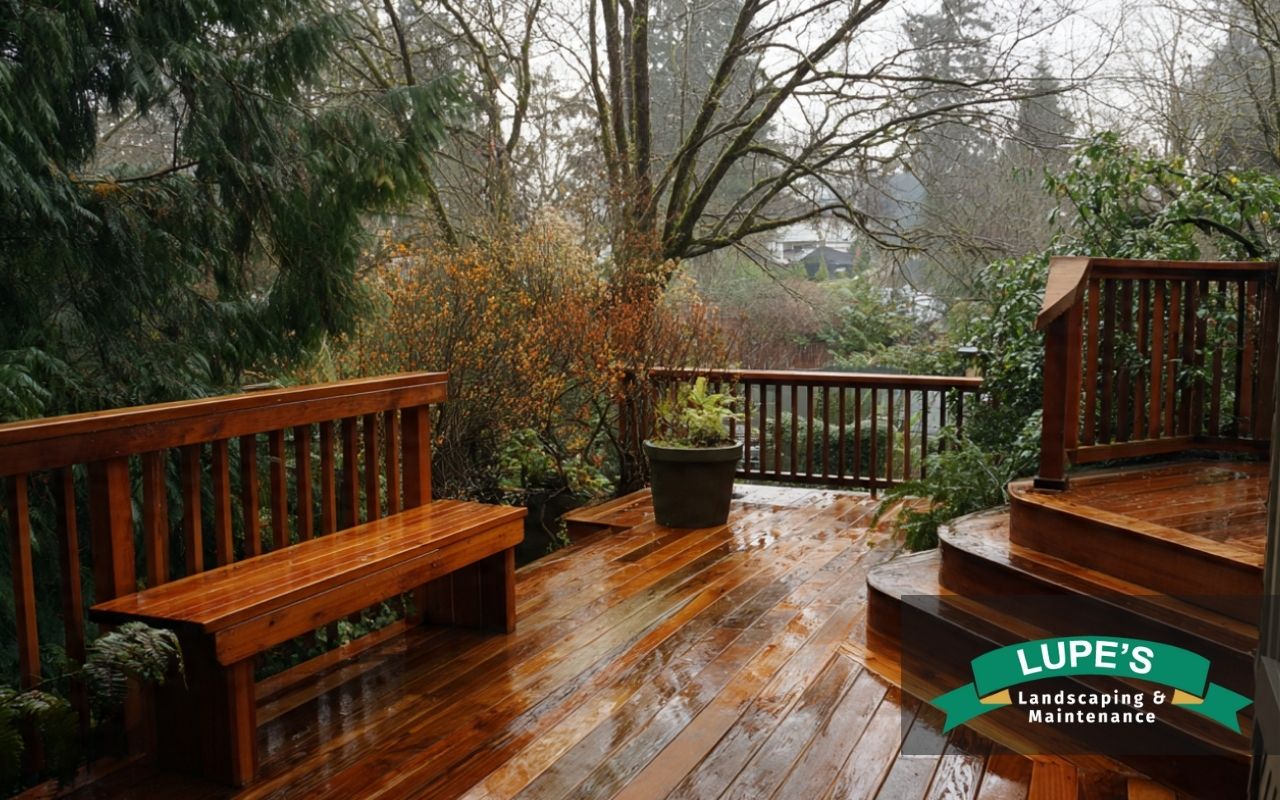
Ensure “Winter Deck Safety in Bainbridge Island” this season. As the crisp air settles in and the first frost arrives, your deck may need attention. Winter weather can turn a safe outdoor spot into a hazard if it is not cared for. Therefore, small issues like slick stairs or loose rails can become real risks.
Winter deck safety in Bainbridge Island starts with simple checks. Focus on fastener corrosion and rot warning signs, since both can weaken the deck. Regular checks and easy preventive steps help your deck stay solid through storms. For support with seasonal upkeep, Lupe’s Landscaping & Maintenance can help you keep the space safer.
Importance of Winter Deck Safety in Bainbridge Island
Winter deck safety in Bainbridge Island helps your deck stay a reliable part of your home during icy months. Coastal weather can shift fast, bringing rain, frost, and snow that hide dangers. As a result, a stable deck supports gatherings, warm drinks outside, and playtime, even when mornings feel slick.
Keep your plan simple but steady. A small amount of time now can prevent big repairs later. Check boards for weak spots, test railings, and clear debris. If you want a deeper seasonal inspection, Lupe’s Landscaping & Maintenance can guide you with practical next steps.
Common Winter Hazards for Decks
Winter weather creates several problems that can affect safety and structure. Ice can make boards slick, and heavy snow can add stress to the frame. Also, water that slips between boards can freeze, then expand, which may lead to cracks or warping.
- Ice buildup that makes walking unsafe
- Snow load that adds weight to the frame
- Freeze-thaw cycles that cause splitting or movement
- Moisture in joints that speeds up wear
Pay extra attention to shaded areas where ice lasts longer. Wind-driven rain can push moisture under rails and into joints, which can lead to rust or hidden decay. A quick sweep before and after storms helps you spot issues early. For more guidance, review deck safety guidance to match your checks to real risks.
Signs of Fastener Corrosion on Your Deck
Fastener corrosion can weaken your deck faster than you expect, especially in damp coastal air. Screws, nails, and brackets can rust and lose strength over time. Consequently, boards may loosen and railings may feel unstable when you lean on them.
- Reddish or brown streaks around screw heads
- Flaking metal or pitted hardware surfaces
- Loose boards near connection points
- Wobble in posts or rail sections
If you spot these signs, replace damaged hardware with corrosion-resistant options. Stainless steel or coated fasteners often hold up better in wet months. If you are unsure what to replace first, Lupe’s Landscaping & Maintenance can help prioritize the most important connections.
Recognizing Rot Warning Signs Early
Rot warning signs often show up after moisture stays trapped under leaves, planters, or outdoor furniture. Over time, fungi can weaken boards and even support beams. Therefore, early detection helps you avoid larger repairs and keeps the deck safer all season.
- Soft spots that compress when pressed
- Dark stains that spread along the grain
- Crumbling edges or splintering corners
- Small holes that may suggest insects entered
Press each board firmly and check areas near posts and stairs. If a board gives more than expected, treat it as a warning. When rot spreads, it can compromise key supports. If you want a second set of eyes, Lupe’s Landscaping & Maintenance can help confirm what needs repair.
Essential Winter Deck Maintenance Tips
Good winter prep begins with cleaning and simple repairs. Sweep away leaves, needles, and dirt since they trap moisture. Then, wash the surface gently and let it dry fully. After that, focus on protection and stability so winter weather has less impact.
- Sweep debris weekly to reduce trapped moisture
- Clean with a mild deck cleaner and soft brush
- Seal or stain to help repel water and slush
- Tighten loose screws and replace damaged boards
Reseal every one to two years based on exposure. If you are planning upgrades during the off-season, explore composite decking options, since it can reduce some seasonal upkeep. For maintenance help, Lupe’s Landscaping & Maintenance can support both inspections and repairs.
Preventative Measures for Slippery Surfaces
Slippery boards are one of the biggest winter risks. Improve stair traction and grip in high-traffic zones, especially near doors and steps. Also, small changes can make a big difference on icy mornings, so it helps to act before storms hit.
- Use anti-slip tape on steps and landings
- Add textured coatings in high-traffic paths
- Place rubber-backed mats near entry points
- Install stair treads that fit your deck style
Keep mats clean so they do not trap water underneath. If you have a complex layout with more steps and turns, multi-level deck ideas can help you think through safer flow and footing.
Inspecting and Repairing Loose Railings
Loose railing checks matter even more when surfaces are slick. Railings offer steady support, so any wobble can increase fall risk. Therefore, test each section by shaking it firmly. If it moves, the hardware may be loose, rusted, or stripped.
Tighten screws and replace weak brackets right away. Add support blocks behind posts to reduce movement. Keep spare screws and anchors on hand so you can fix problems quickly after storms. If you want a thorough winter inspection, Lupe’s Landscaping & Maintenance can help reinforce railings before the busiest winter gatherings.
Ensuring Proper Drainage on Your Deck
Drainage helps prevent ice patches and slows decay. When water pools, it can worsen fastener corrosion and feed rot. So, keep gaps between boards clear and remove debris often. Also, check where roof runoff lands, since that water can freeze on the deck surface.
Clear downspouts and gutters so water does not spill onto the deck. If needed, use extensions to move water away. In some cases, improving runoff may require small layout changes. For a drainage-focused assessment, Lupe’s Landscaping & Maintenance can help you find where water gathers and how to reduce it.
Using Safe De-icing Practices
Choose de-icing products that protect both the deck and nearby plants. Rock salt can damage wood fibers and speed up fastener corrosion. Instead, use gentler options like magnesium chloride or calcium magnesium acetate, and apply them lightly.
After ice melts, sweep away leftover crystals to reduce moisture buildup. Avoid sharp metal tools that can gouge boards. A plastic shovel or stiff broom is safer for the surface and still works well.
Frequently Asked Questions
How often should I inspect my deck in winter?
Check it before the first freeze and after major storms. Also, do quick weekly walk-throughs for slick spots and movement.
What are the easiest rot warning signs to spot?
Look for soft boards, dark stains, and crumbling edges. If a board compresses when pressed, treat it as a concern.
How do I know if fasteners are corroding?
Watch for rust streaks, flaking metal, and loose boards near screws. Corrosion often shows up around connection points first.
What can I do to improve stair traction quickly?
Use anti-slip tape, rubber-backed mats, or stair treads. Place them where people step most often, especially near doors.
When should I call a professional for a deck check?
If railings wobble, boards feel soft, or supports look damaged, get help. You can reach Lupe’s Landscaping & Maintenance through the contact page to schedule guidance.
Enjoying a Safe and Secure Deck This Winter
Winter deck safety in Bainbridge Island is easier when you follow a routine. Regular checks for fastener corrosion, rot warning signs, and loose railing checks help your deck stay steady. Improving stair traction and keeping drainage clear lowers slip risk during frosty mornings.
By cleaning, sealing, inspecting, and using safe de-icing steps, you keep the deck ready for winter use. When you want extra support, Lupe’s Landscaping & Maintenance can help you protect your outdoor space and keep winter worries low.