
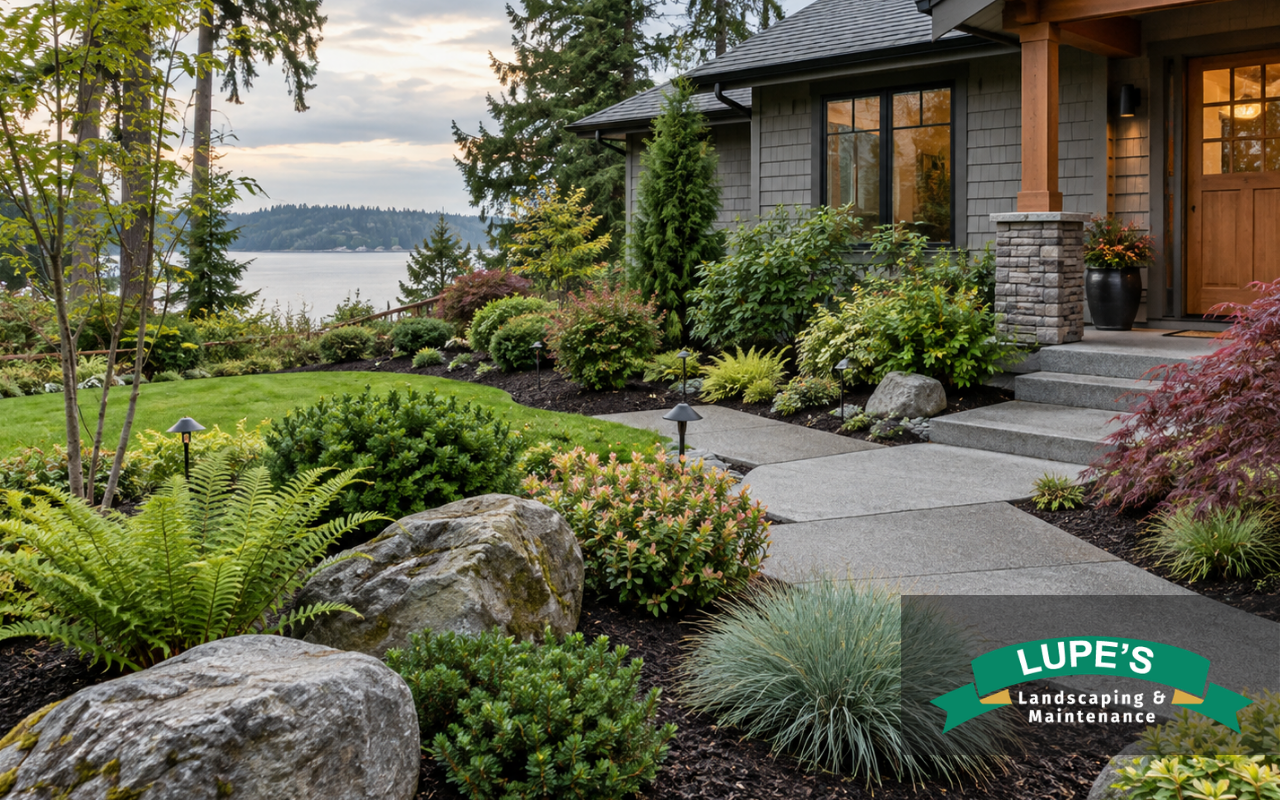
Low maintenance landscaping on Bainbridge Island starts with choosing plants and landscape features that fit the property instead of requiring constant correction. Native plants, mulch, efficient irrigation, practical bed layouts, and proper spacing can all reduce routine yard work while keeping the yard attractive.
A low-maintenance yard does not mean a maintenance-free yard. Every landscape needs seasonal attention. However, thoughtful planning can reduce unnecessary watering, pruning, weed control, and plant replacement. If you want a more manageable yard, discuss your landscaping project with our team.
Start With Plants That Match the Property
Plant selection is one of the most important parts of an easier landscape. Plants placed in the wrong sunlight, moisture, or space conditions often need more attention and may eventually require replacement.
Before choosing plants, identify sunny areas, shaded locations, drainage patterns, and available space for mature growth. You can also review our guide to the best plants for landscaping on Bainbridge Island.
Check These Site Conditions First
- Sunlight and shade levels
- Soil drainage and moisture
- Mature plant height and width
- Access for pruning and cleanup
- Watering needs during dry periods
Use Native Plants Where They Make Sense
Native plants can support lower-maintenance landscapes because they are associated with regional growing conditions. Sword fern, salal, and Oregon grape are examples that may work in suitable locations.
Still, native plants need proper placement. Sunlight, moisture, soil conditions, and available space influence how well they perform. The right plant in the wrong location can still create extra work.
Reduce High-Maintenance Lawn Areas Strategically
Large lawn areas can require mowing, watering, edging, and seasonal attention. Homeowners who want less upkeep may reduce lawn space in areas that provide little function.
This does not mean eliminating all turf. Keep lawn where it supports play, pets, access, or visual balance. Then simplify sections that demand more maintenance than they provide in value.
Use Mulch to Manage Weeds and Soil Moisture
Mulch can help reduce weed growth while slowing moisture loss from planting beds. Organic materials such as bark or wood chips can also create a cleaner visual separation between plants and other landscape areas.
Important: mulch should not be piled directly against plant stems or tree trunks. Correct placement matters because excessive material can trap moisture where it is not needed.
Use This Low-Maintenance Landscape Planning Guide
A practical landscape plan should connect every feature to a maintenance benefit. Plants, mulch, irrigation, and lawn areas work best when they support the same long-term goal.
Low-Maintenance Landscaping Options
| Landscape Element | Maintenance Benefit | Planning Consideration |
|---|---|---|
| Native plants | Can fit regional conditions | Still require proper placement |
| Mulch | Helps manage weeds and moisture | Needs correct depth and spacing |
| Drip irrigation | Targets water near roots | Requires seasonal adjustment |
| Evergreen plants | Provides year-round structure | Plan around mature size |
| Reduced lawn areas | Can reduce mowing and edging | Keep functional lawn where useful |
Match Plants to Sun, Shade, and Water Needs
One of the simplest ways to reduce landscape maintenance is to place plants where their natural requirements are more likely to be met. Shade-tolerant plants belong in lower-light areas, while sun-loving plants perform better where stronger light is available.
Plants with similar water needs should also be grouped together. This makes irrigation easier to manage and reduces the chance that one plant receives too much water while another receives too little.
Use Efficient Irrigation Instead of Frequent Watering
Efficient irrigation can reduce the time homeowners spend moving hoses or watering individual plants. Drip irrigation can direct water closer to plant roots and may reduce unnecessary water loss compared with less targeted watering methods.
Irrigation should still be adjusted around weather, plant establishment, and seasonal conditions. A system that runs the same way all year can waste water or stress plants.
Design Beds for Easier Long-Term Maintenance
Plant beds become harder to maintain when plants are installed too closely, mature sizes are ignored, or access for pruning and cleanup is limited.
A better approach is to leave room for growth and organize plants according to similar care requirements. This reduces crowding and makes routine landscape work more manageable.
Avoid Choices That Create Extra Yard Work
Several design decisions can increase the amount of work a yard requires. These issues often create more long-term maintenance than homeowners expect.
High-Maintenance Landscape Triggers
- Plants placed in unsuitable sunlight conditions
- Varieties that outgrow their available space
- Large lawn areas that need frequent edging
- Poorly planned irrigation zones
- Beds without effective weed management
- Plants with conflicting water needs grouped together
Plan for Seasonal Maintenance Instead of Constant Maintenance
A practical landscape should still allow for periodic pruning, mulch replacement, cleanup, irrigation adjustments, and plant care. The goal is not to eliminate maintenance. The goal is to avoid unnecessary recurring work.
Grouping tasks seasonally can make landscape care more manageable than reacting to individual problems throughout the year.
Frequently Asked Questions
What are the best low-maintenance landscaping plants?
The best options depend on sunlight, moisture, available space, and site conditions. Native plants, evergreen varieties, and suitable ground covers may reduce upkeep when correctly placed.
Does mulch reduce landscape maintenance?
Mulch can help control weeds and retain soil moisture, which may reduce some routine maintenance. Proper placement and periodic replacement are still necessary.
Is drip irrigation good for low-maintenance landscaping?
Drip irrigation can reduce manual watering by directing water closer to plant roots. The system should still be adjusted according to weather and plant needs.
Can reducing lawn areas lower yard maintenance?
Yes. Reducing lawn in areas where it provides little functional value can decrease mowing, edging, and watering requirements.
Does low-maintenance landscaping require no maintenance?
No. These landscapes still require seasonal care, but better plant selection and design can reduce unnecessary recurring work.
Create a Landscape That Is Easier to Manage
Low-maintenance landscaping on Bainbridge Island works best when plants, irrigation, mulch, lawn areas, and bed layouts are planned as one system. Each decision should support the long-term function of the yard.
At Lupe’s Landscaping & Maintenance, we can help homeowners evaluate their outdoor space and identify practical ways to reduce routine upkeep. Create an easier landscape with a plan designed around your property and goals.